Key Takeaways
- How long to build a deck ranges from 1 week of active construction to 2–3 months total with planning and permits included.
- Permit approval alone can add 2–6 weeks to your project timeline depending on your municipality. Understanding Pennsylvania permit and licensing requirements helps you plan accordingly.
- Material choice significantly affects build time—composite decking and specialty hardwoods often have longer lead times than pressure-treated lumber. Learn more about comparing decking materials and lead times.
- The top-rated Pennsylvania deck professionals homeowners hire will give you a written timeline before work begins.
- Weather, contractor availability, and site conditions are the three most common causes of residential deck delays.
- Local deck building services with strong project management practices consistently finish closer to the original schedule. Discover the benefits of choosing local deck builders.
Your Deck Timeline Starts Long Before the First Board Gets Cut
One of the most common frustrations homeowners experience with deck projects is a gap between expected and actual completion time. A contractor says “a couple of weeks” and the project stretches into months. That gap almost always comes from one source: the homeowner was only counting construction days, not the full project timeline.
How long to build a deck is not just a question about hammers and lumber. It is a question about permits, material lead times, site preparation, inspections, and contractor scheduling—all of which happen before and between the visible construction phases.
This article walks through every phase of a realistic deck build timeline, explains what drives delays, and gives you the tools to set accurate expectations before you sign anything. Using this step-by-step guide to hiring a deck contractor helps ensure timeline clarity from the start.
The Full Deck Building Timeline: Phase by Phase
Most homeowners think of deck construction as a single event. Professional deck installers Pennsylvania homeowners work with understand it as a multi-phase process, each with its own timeline variables.
Phase 1: Planning and Design (1–3 Weeks)
The timeline begins the moment you start contacting finding reliable local contractors. This phase includes initial consultations, site visits, design development, and quote preparation. A thorough contractor will not rush this phase—accurate measurements, material selection, and structural planning at this stage prevent costly changes later.
If you are working with a contractor who offers design services, plan review and revision cycles can extend this phase. A straightforward deck on a flat lot with standard materials moves through planning faster than a multi-level structure on a sloped property with custom railing.
Phase 2: Permitting (2–6 Weeks)
Permitting is the phase that surprises most homeowners. Under the Pennsylvania Uniform Construction Code guidelines, virtually all attached decks and most freestanding structures require a building permit before construction begins. Permit processing times vary significantly by municipality.
In some townships, permits are processed within 10 business days. In others, particularly in densely populated counties, review queues can push processing to four to six weeks. Your contractor should be familiar with your local building department’s typical turnaround and factor that into the project schedule from the start.
Permit submissions that are incomplete or contain plan errors get rejected and restart the clock. This is one of the strongest arguments for hiring experienced residential deck contractors who know exactly what local building departments require. Understanding Pennsylvania permit and licensing requirements helps you evaluate contractor expertise in this critical area.
Phase 3: Material Procurement (1–4 Weeks)
Once permits are approved, materials need to be ordered and delivered. For standard pressure-treated lumber, lead times are typically short—often a few days. For composite decking, premium hardwoods, or custom railing systems, lead times can extend to two to four weeks depending on supplier inventory and time of year. Learn about comparing decking materials and lead times to make informed choices.
Spring and early summer are peak seasons for deck construction. During these periods, material availability tightens and contractor schedules fill quickly. Homeowners who begin planning in late winter consistently report shorter overall timelines because both materials and contractor availability are more accessible. Consider the optimal time to schedule your deck project for faster material procurement.
Phase 4: Site Preparation (1–3 Days)
Site preparation includes clearing the work area, marking footing locations, and any grading required to ensure proper drainage. On sites with significant slope, tree roots, or existing hardscaping to remove, this phase takes longer. On a clean, level lot it can be completed in a single day.
Footing excavation and concrete pouring happen during this phase. Concrete footings typically require 24–48 hours to cure before framing begins, which is a non-negotiable pause in the construction sequence. Industry professional structural framing guidelines provide technical context for these critical timing requirements.
Phase 5: Framing and Structural Construction (2–5 Days)
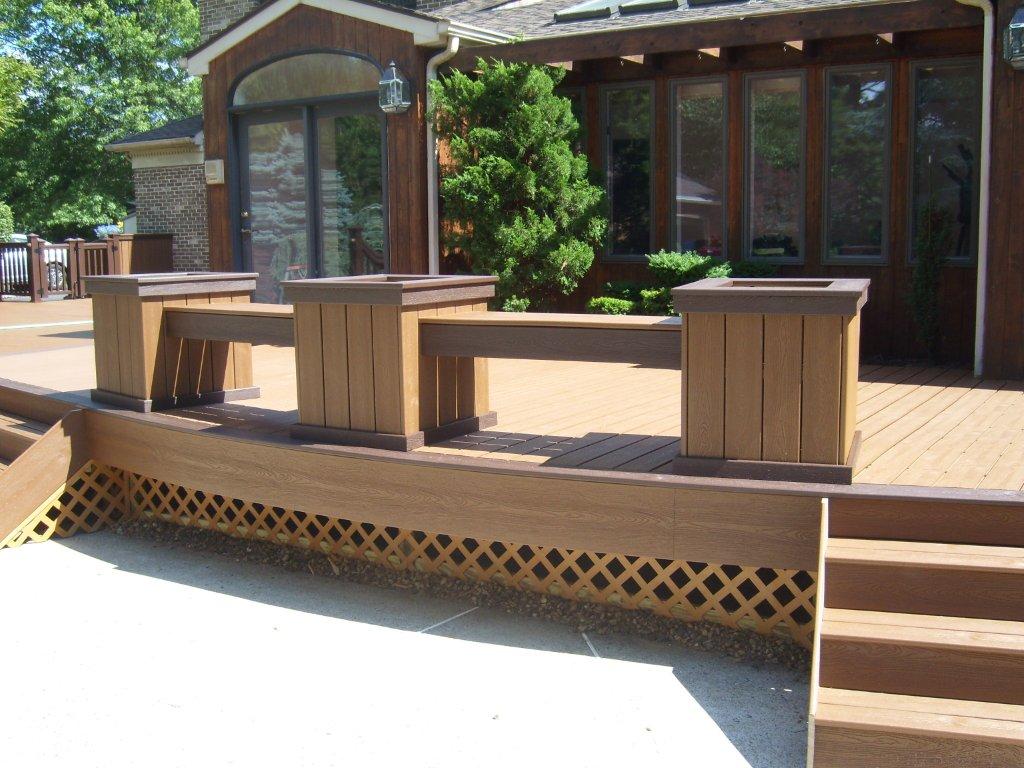
Framing is the most visible phase—posts, beams, joists, and ledger attachment all come together during this period. For a standard single-level deck, an experienced crew can complete framing in two to three days. Multi-level decks, decks with built-in benches or planters, or structures requiring engineered beam specifications take longer.
Many municipalities require a framing inspection before decking materials are installed. This adds another scheduling variable: the contractor must request the inspection, and the building department must schedule and complete it before work proceeds.
Phase 6: Decking, Railing, and Stairs (2–5 Days)
With framing inspected and approved, decking boards, railing systems, and stair construction follow. This phase moves relatively quickly on straightforward projects. Hidden fastener systems, intricate railing designs, and custom stair configurations all add time.
Phase 7: Final Inspection and Completion (3–10 Days After Construction)
After construction is complete, a final inspection is required to close the permit. Scheduling the final inspection depends on the building department’s availability—in some municipalities this happens within a few days of the request, in others it may take up to two weeks.
A project is not truly complete until the permit is closed. An open permit creates complications at resale and can affect homeowner’s insurance coverage.
Deck Build Timeline Comparison by Project Type
| Project Type | Planning & Design | Permitting | Material Lead Time | Active Construction | Total Realistic Timeline |
|---|---|---|---|---|---|
| Small ground-level deck (under 200 sq ft, PT lumber) | 1 week | 2–3 weeks | 3–5 days | 3–5 days | 5–8 weeks |
| Standard single-level attached deck (200–400 sq ft) | 1–2 weeks | 2–4 weeks | 1–2 weeks | 5–7 days | 6–10 weeks |
| Large single-level deck (400–600 sq ft, composite) | 2–3 weeks | 3–5 weeks | 2–3 weeks | 7–10 days | 8–12 weeks |
| Multi-level or custom deck with built-ins | 3–4 weeks | 4–6 weeks | 3–4 weeks | 10–15 days | 10–16 weeks |
| Deck with pergola or covered structure | 3–5 weeks | 5–6 weeks | 3–5 weeks | 12–18 days | 12–18 weeks |
What Causes Deck Projects to Run Over Schedule?
Understanding delay causes is as important as understanding the baseline timeline. The most common reasons residential deck projects run longer than planned include:
- Permit rejections due to incomplete submissions. A single missing document or incorrect measurement on a permit application can add two to four weeks to the timeline. Experienced local deck building services minimize this risk by submitting complete, code-compliant plans the first time. The benefits of choosing local deck builders include this municipal expertise.
- Material back-orders. Composite decking in popular colors and premium railing systems are frequently back-ordered during peak season. Contractors who confirm material availability before committing to a start date prevent this delay. Understanding comparing decking materials and lead times helps set realistic expectations.
- Weather. Concrete cannot be poured in freezing temperatures. Decking installation in heavy rain creates safety and quality issues. Most reputable contractors build weather buffer days into their project schedules. Planning around the optimal time to schedule your deck project minimizes weather-related delays.
- Framing inspection delays. If the building department cannot schedule a framing inspection promptly, construction pauses until it is completed. Contractors familiar with local department workloads can often anticipate and work around these windows.
- Scope changes mid-project. Homeowners who change material specifications, add features, or modify dimensions after construction begins extend the timeline for every subsequent phase. Every change requires a change order, potential re-permitting, and rescheduling of materials and labor. Avoid common hiring mistakes that cause delays by finalizing your scope early.
- Contractor scheduling conflicts. During peak season, even the top-rated Pennsylvania deck professionals are managing multiple projects simultaneously. A contractor who is overcommitted may not have crew available when your project is ready to move forward.
Pros and Cons of Starting Your Deck Project in Different Seasons
| Season | Pros | Cons |
|---|---|---|
| Winter (Dec–Feb) | Fastest contractor availability, best pricing, early permit submission | Weather delays likely, material delivery slower |
| Spring (Mar–May) | Ideal building weather, finish by summer | Peak demand—contractors book fast, material lead times longer |
| Summer (Jun–Aug) | Long daylight hours for construction | Hottest contractor schedules, highest material prices |
| Fall (Sep–Nov) | Good weather, contractors more available than summer | Shorter days, risk of early frost affecting concrete |
Considering the optimal time to schedule your deck project can significantly impact your overall timeline and budget.
Do and Don’t: Managing Your Deck Build Timeline
| DO | DON’T |
|---|---|
| Ask your contractor for a written phase-by-phase schedule before signing | Accept a vague “a few weeks” verbal timeline |
| Factor permit processing time into your expected start date | Assume construction begins the week after signing |
| Confirm material availability before finalizing your start date | Choose materials without checking current lead times |
| Build 2–3 weeks of buffer into any timeline-sensitive planning | Schedule events on your new deck before it is complete |
| Request framing inspection scheduling as soon as framing is complete | Wait until the last moment to request inspections |
| Plan for weather delays, especially for spring and fall builds | Assume every construction day will go as scheduled |
Following this step-by-step guide to hiring a deck contractor helps ensure timeline accountability from the outset. Avoiding common hiring mistakes that cause delays protects your schedule and budget.
Timeline Expectations by Situation
If you need a deck completed by a specific date—a summer gathering, a home sale, or a family event— communicate that deadline to your contractor before work begins.
A reputable contractor will tell you honestly whether the timeline is achievable given permitting, material availability, and their current schedule. If they cannot meet the date reliably, it is better to know before signing than to be disappointed midway through construction.
If you are not deadline-driven and want the best possible price and contractor availability, consider initiating your project in late fall or early winter. Permit submissions made in November or December are often processed faster due to lower volume, materials can be secured at better prices, and contractors who are less busy in the off-season often give more focused attention to each project.
The optimal time to schedule your deck project can make a significant difference in both cost and completion speed.
A Real-World Scenario
A homeowner in Delaware County, Pennsylvania contacts three contractors in April with a goal of having a 350-square-foot composite deck ready by the Fourth of July—approximately 10 weeks away.
The first contractor, a solo operator found through a search for finding reliable local contractors, says the project will take “about two weeks once we get started” and does not mention permits. The second contractor provides a detailed phase timeline: two weeks for design and permitting submission, four to five weeks for permit approval based on the county’s known processing time, one week for material delivery, and one week for construction.
Total: eight to nine weeks minimum, with no buffer for weather or inspection scheduling. They advise the July 4th deadline is possible but tight. The third contractor gives a similar timeline but notes they are booked through mid-June and cannot guarantee a July completion.
The homeowner hires the second contractor. Permits are submitted in week one, approved in week five, materials arrive in week six, and construction is completed in week eight. A final inspection is scheduled and passed in week nine. The deck is ready with nearly two weeks to spare.
The first contractor’s “two weeks” estimate did not include permits, materials, or inspections. Had the homeowner hired them, the deck would not have been ready until late August at the earliest. This scenario illustrates why following this step-by-step guide to hiring a deck contractor matters.
Quick Answers – FAQ
Q: How long does it take to build a deck from start to finish?
A: The full timeline—including planning, permitting, materials, and construction—typically ranges from six to sixteen weeks depending on project complexity, municipality, and season. Active construction itself usually takes three to fifteen days.
Q: How long does a deck permit take in Pennsylvania?
A: Permit processing times vary by municipality but generally range from two to six weeks. Homeowners should ask their contractor about the typical turnaround time for their specific township or borough before setting a construction start date. Understanding Pennsylvania permit and licensing requirements provides helpful context.
Q: Can a deck be built in a week?
A: Active construction on a small, straightforward deck can be completed in three to five days by an experienced crew. However, permitting and material procurement mean the full project timeline will always be longer than construction time alone.
Q: What is the fastest time of year to get a deck built?
A: Late fall and winter typically offer the shortest overall timelines due to lower contractor demand, faster permit processing, and better material availability. The trade-off is weather-related delays. Learn about the optimal time to schedule your deck project.
Q: Does deck size significantly affect build time?
A: Yes. A 150-square-foot ground-level deck and a 500-square-foot multi-level structure with custom railings are fundamentally different projects. Larger, more complex decks require more framing time, longer material lead times, and additional inspection stages.
Q: What causes the most common deck construction delays?
A: Permit processing delays, material back-orders, framing inspection wait times, and scope changes mid-project are the most frequent causes. Weather is a significant variable for projects that span multiple weeks. Review expert advice on evaluating contractor reliability for additional guidance.
Q: Should I get a written timeline from my deck contractor?
A: Yes, always. A written phase-by-phase schedule sets clear expectations, gives you a basis for holding the contractor accountable, and ensures both parties agree on what “on time” means before work begins. Avoid common hiring mistakes that cause delays by getting this documentation upfront.
Q: How long after construction is complete before I can use my deck?
A: You can typically use your deck as soon as the final inspection is passed and the permit is closed. For pressure-treated lumber, most contractors recommend allowing the wood to dry for several months before applying stain or sealant.
Q: Do inspections add time to a deck project?
A: Yes. Framing inspections pause construction until the building department completes its review, and final inspections must be scheduled and passed before the permit closes. Both add days to the overall timeline.
Q: How do I know if my contractor’s timeline is realistic?
A: Ask them to provide a written phase-by-phase breakdown that includes permitting, material delivery, and inspection scheduling—not just active construction days. Compare their timeline against the phases outlined in this article to assess whether anything has been omitted. This step-by-step guide to hiring a deck contractor provides a comprehensive evaluation framework.
Glossary of Terms
Building Permit: An official approval issued by a local municipality authorizing construction to begin. For deck projects in Pennsylvania, permits are required under the Pennsylvania Uniform Construction Code guidelines for virtually all attached decks and most freestanding structures. Permit processing time is one of the most significant timeline variables in any deck project.
Framing Inspection: A mandatory review by a local building inspector that occurs after the deck’s structural frame is complete but before decking boards are installed. The framing inspection verifies that posts, beams, joists, and ledger attachment meet code requirements. Construction cannot proceed until the inspection is passed. Industry professional structural framing guidelines provide technical context for these requirements.
Lead Time: The period between ordering materials and their delivery to the job site. Lead times vary by material type—pressure-treated lumber typically has shorter lead times than composite decking or specialty railing systems, particularly during peak construction season. Learn about comparing decking materials and lead times to plan accordingly.
Change Order: A written amendment to a construction contract that modifies the project scope, cost, or timeline. Mid-project scope changes are one of the most preventable causes of deck construction delays, and any modification should always be documented in a formal change order signed by both parties. Avoid common hiring mistakes that cause delays by finalizing your scope early.
A Realistic Timeline Is the Foundation of a Successful Project
Deck projects that go smoothly share one thing in common: both the homeowner and the contractor agreed on a realistic, phase-by-phase timeline before work began. Projects that frustrate homeowners almost always involve a timeline that only counted active construction days and ignored everything surrounding them.
How long to build a deck is not a simple answer—but it is a knowable one. Six weeks for a small straightforward project. Three to four months for a large custom structure with complex permitting.
The number that matters is the one your specific contractor gives you in writing, broken down by phase, after a proper site visit and permit research.
Ask for that breakdown. Hold the contractor to it. And give yourself the buffer that every experienced builder knows a project needs. The deck you have been planning deserves a timeline built on the same care as the structure itself.
Ready to get a realistic timeline for your deck project? Contact our team today and ask for a written phase-by-phase schedule before you commit to anything. Work with top-rated Pennsylvania deck professionals who prioritize transparency and accountability from the first conversation.