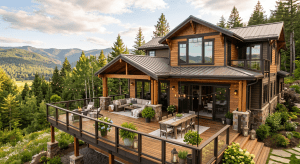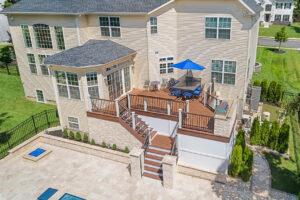
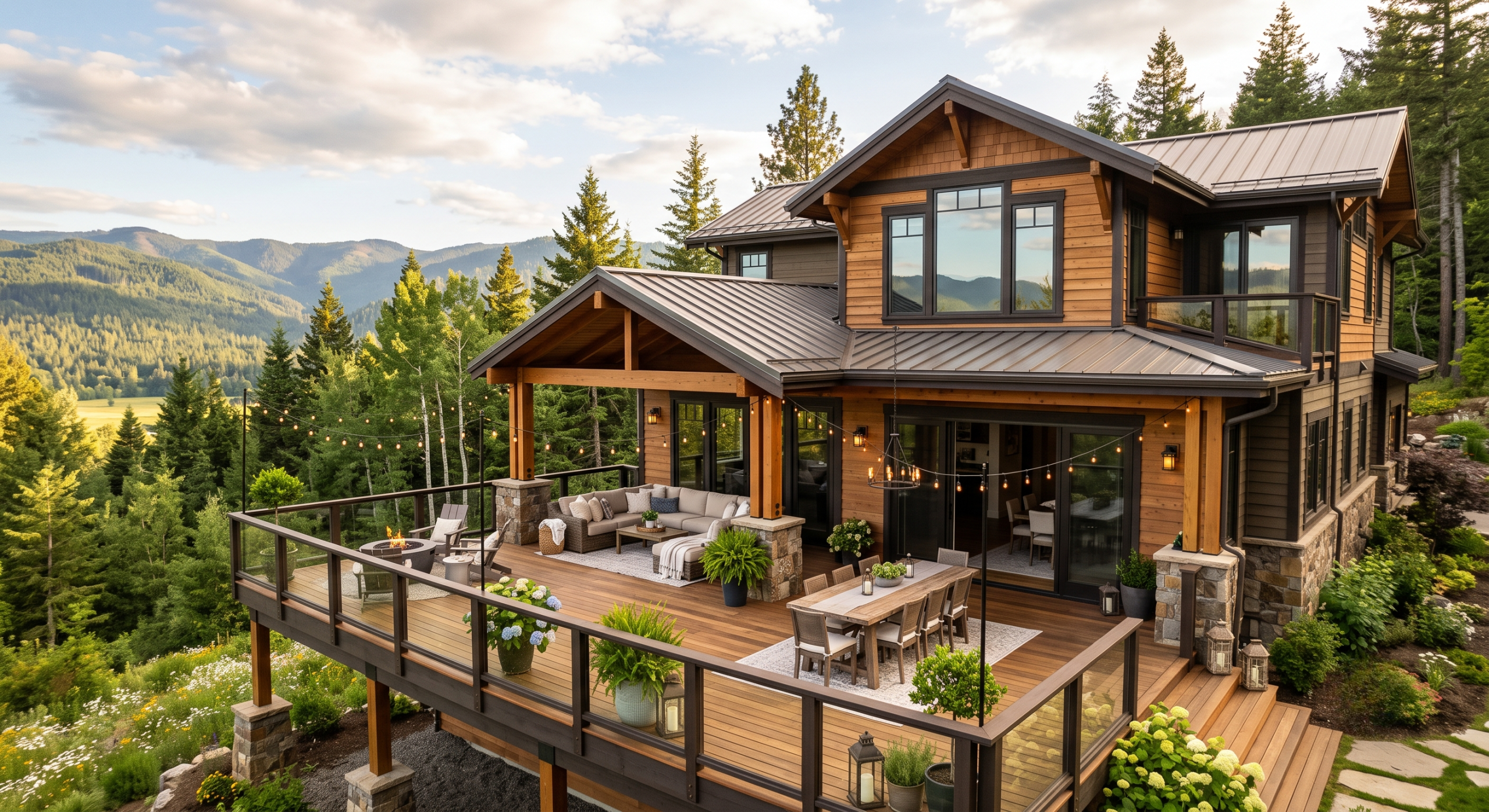
Key Takeaways
- How long does it take to build a deck? Construction usually takes days, not months.
- Permits and design approvals often take longer than the physical build itself.
- Composite and multi-level decks generally need more time than simple wood platforms.
- Booking a deck contractor in winter can get you a spring start date.
- Reading deck contractor reviews helps you spot builders who finish on schedule.
- Weather, footing inspections, and material backorders are the most common sources of delay.
Homeowners who ask how long it takes to build a deck usually get one of two answers. Either “about a week” or “it depends.” Both are true, and neither is very useful when you are trying to plan a graduation party or a summer of backyard cookouts.
The honest answer is that a deck project has two clocks running. One measures the days a crew spends on your property. The other measures everything around it: design, permits, material orders, inspections, and the contractor’s existing schedule.
This guide breaks down both clocks. You will learn typical timelines by deck type, what slows projects down, how to compare builders, and how to keep your own project moving. If you are researching the top-rated local experts in Pennsylvania or anywhere else in the U.S., this will help you ask sharper questions before you sign anything.
How Long Does It Take to Build a Deck? The Short Answer
For a standard single-level deck, many experienced crews finish the physical construction in roughly three days to two weeks. Larger, elevated, or feature-heavy decks can stretch to three or four weeks on site.
The full project timeline is longer. When you add design, permitting, ordering, and inspections, most homeowners should expect somewhere between a few weeks and a few months from first consultation to final sign-off.
The gap between those two numbers is where most frustration comes from. A homeowner hears “one week” and assumes the deck will be done seven days after they call. In reality, that week of building often sits at the end of a longer runway.
The Two Timelines: Project Time vs. Build Time
Project Time
Project time starts with your first phone call and ends when the final inspection is approved. It includes consultations, design revisions, contract signing, the permit process, material lead times, and scheduling. This is the number that matters if you have a hard deadline.
Build Time
Build time is the days the crew is actually working on your property. It covers site prep, footings, framing, decking, railings, and stairs. Most contractors quote this number because it is the part they control most directly.
When you compare quotes, ask each builder for both numbers. A contractor who only gives you build time is not being dishonest, but you are missing half the picture.
Typical Deck Timelines by Project Type
The table below shows general ranges based on common industry experience. Your actual timeline depends on your site, your local permit office, and your builder’s workload.
| Deck Type | Typical On-Site Build Time | Typical Full Project Time | Main Time Factors |
|---|---|---|---|
| Small ground-level wood deck | A few days to 1 week | 2 to 6 weeks | Permit needs, site grading |
| Standard single-level wood deck | 1 to 2 weeks | 4 to 8 weeks | Footing inspection, weather |
| Composite single-level deck | 1 to 2 weeks | 4 to 10 weeks | Material ordering, hidden fasteners |
| Elevated or second-story deck | 2 to 3 weeks | 6 to 12 weeks | Engineering, ledger attachment, inspections |
| Multi-level deck with features | 3 to 4+ weeks | 2 to 4+ months | Design complexity, lighting, built-ins |
If you need a deck by a specific date, plan backward from the full project time, not the build time. If your deadline is flexible, you have more room to choose a builder based on quality instead of availability.
What Happens During a Deck Build: Step by Step
Understanding the sequence helps you see where time actually goes. Here is how most professional deck projects unfold.
- Initial consultation. The builder visits, measures the space, and discusses your goals, budget, and materials.
- Design and quote. You receive a drawing and detailed written estimate. Revisions can add a few days to a couple of weeks.
- Contract and deposit. Once signed, you are placed on the builder’s schedule.
- Permit application. The contractor submits plans to your local building department. Review times vary widely by municipality.
- Material ordering. Lumber is often available quickly. Specialty composite colors or railing systems may take longer.
- Site preparation. The crew marks the layout, clears the area, and checks for utility lines.
- Footings and footing inspection. Holes are dug and concrete is poured. Many jurisdictions require an inspection before work continues.
- Framing. Posts, beams, joists, and the ledger board go in. Some areas require a framing inspection.
- Decking, stairs, and railings. The visible surface goes down, followed by stairs and guardrails.
- Final inspection and walkthrough. The inspector signs off and the builder reviews the finished deck with you.
Steps 4, 7, and 10 depend on your local building department, not the builder. That is why two identical decks in neighboring towns can finish weeks apart.
What Slows Down a Deck Project
Permits and Inspections
Most decks attached to a house or raised above a certain height need a permit. In Pennsylvania, residential construction generally falls under the state construction codes, which is based on the International Residential Code published by the International Code Council. Local review times can range from days to several weeks depending on the season and the municipality.
Weather
Rain, frozen ground, and extreme heat all affect footings and concrete. Many builders will not pour footings in heavy rain or on frozen soil. A wet spring can push an entire schedule back.
Material Availability
Pressure-treated lumber is usually easy to source. Specific composite colors, specialty railings, or custom features sometimes require ordering ahead. Ask your builder which items on your list carry the longest lead times.
Contractor Backlog
The best deck builders are often booked out during peak season. That is a good sign for their quality, but it affects your start date. Spring and early summer are typically the busiest months for deck contractors across much of the U.S.
Change Orders
Changing the design after construction starts is one of the most common causes of delay. Every change may require new materials, a revised plan, and sometimes a revised permit.
Wood vs. Composite: Which Builds Faster?
Material choice affects both build time and long-term upkeep. Here is how the two most common options compare.
Pressure-Treated Wood
Pros:
- Widely available, so ordering delays are rare
- Familiar to nearly every deck crew
- Lower upfront material cost
Cons:
- Requires regular staining or sealing
- More prone to splitting and warping over time
- Shorter lifespan than many composite options
Composite Decking
Pros:
- Low maintenance with no staining needed
- Consistent color and appearance
- Long lifespan when installed correctly
Cons:
- Specific colors may need to be ordered in advance
- Hidden fastener systems can add install time
- Higher upfront material cost
If speed is your top priority and you have a firm deadline, pressure-treated wood is usually the safer bet. If you want lower maintenance over the next 20+ years and can wait a little longer, comparing wood vs. composite options often makes more sense.
How to Choose a Builder Who Finishes on Time
Searching “deck builders near me” will give you plenty of names. The harder part is figuring out which ones actually deliver on schedule.
Start with reading past client reviews on Google and the Better Business Bureau. Look past the star rating and read what customers say about communication, cleanup, and timelines. A pattern of “they finished when they said they would” is worth more than a handful of five-star ratings with no detail.
In Pennsylvania, home improvement contractors are generally required to register with the Pennsylvania Attorney General’s Office under consumer protection laws. Ask for the registration number before you sign. Top rated deck builders in PA will provide it without hesitation.
The North American Deck and Railing Association (NADRA) is another useful resource. It publishes official deck safety resources for homeowners and promotes industry standards set by NADRA across the industry.
Do / Don’t When Hiring a Deck Contractor
Do:
- Ask for both build time and total project time in writing
- Confirm who pulls the permit and schedules inspections
- Request references from projects completed in the last year
- Get a written payment schedule tied to project milestones
Don’t:
- Pay the full amount upfront
- Hire anyone who suggests skipping the permit
- Assume the lowest quote includes the same scope as the others
- Make major design changes after framing begins
A Real-World Scenario
A homeowner interested in building in Bucks County, Pennsylvania, contacts a deck builder in early March. They want a 16 by 20 foot composite deck finished before a family event in late June.
The consultation happens the following week. The design goes through one round of revisions, and the contract is signed by late March. The permit is submitted in early April and approved about three weeks later. The composite boards in the homeowner’s chosen color take an extra two weeks to arrive.
Construction starts in mid-May. Two rainy days push the footing pour back slightly, but the crew finishes framing, decking, and railings in about eight working days. The final inspection passes in early June.
Total build time: under two weeks.
Total project time: roughly three months.
The homeowner made their deadline because they started early, not because the crew worked fast.
How to Keep Your Deck Project on Schedule
If you want your deck by a specific date, timing your first call matters more than anything else.
- Book in late fall or winter. Many contractors have more availability for consultations and can lock in an early spring start.
- Finalize your design before signing. The fewer changes after contract, the smoother the schedule.
- Choose in-stock materials if your deadline is tight.
- Clear the work area before the crew arrives, including furniture, planters, and anything near the house.
- Stay reachable. Quick answers to builder questions prevent small pauses from becoming long ones.
If you are starting in April and need a deck by Memorial Day, talk to your builder honestly about whether that is realistic. A good contractor will tell you the truth rather than promise a date they cannot hit.
Quick Answers:
How long does it take to build a deck?
A: Most standard decks take one to two weeks of construction. The full project, including design and permits, usually runs several weeks to a few months.
How long does a deck permit take?
A: Permit review times vary by municipality, from a few days to several weeks. Busy seasons and incomplete applications tend to slow approvals.
Can a deck be built in one day?
A: A very small, freestanding platform deck might be built in a day or two. Most attached decks with footings and inspections take longer.
Does composite decking take longer to install than wood?
A: Composite can take slightly longer, especially with hidden fastener systems. Ordering specific colors may also add lead time.
What is the best time of year to build a deck?
A: Late spring through early fall offers the best building weather in most of the U.S. Booking your contractor in winter helps secure an early start.
How do I find top rated deck builders in PA?
A: Check Google reviews, Better Business Bureau profiles, and the contractor’s Pennsylvania Attorney General registration. Ask for recent local references.
Why do deck projects get delayed?
A: The most common causes are weather, permit backlogs, material shortages, and design changes after work begins.
Should I wait for the slow season to save time?
A: Booking during the off-season often gets you an earlier spot on the schedule. The build itself still depends on suitable weather.
Glossary of Terms
- Footing: A concrete base set into the ground that supports the deck’s posts and carries its weight down to stable soil.
- Ledger Board: The framing board that attaches a deck directly to the house. Proper flashing and fastening here are critical for safety.
- Joist: One of the horizontal framing boards that run beneath the deck surface and support the decking boards.
- Change Order: A written agreement to modify the original contract, usually affecting the price, scope, or timeline of the project.
Conclusion
The question of how long it takes to build a deck has a simple answer and a complete one. The simple answer is one to two weeks of construction for most decks. The complete answer includes design, permits, materials, and scheduling, which can add weeks or months.
Homeowners who understand both timelines plan better, choose better contractors, and avoid last-minute stress. Start early, finalize your design before signing, and pick a builder whose reviews show a track record of finishing on time.
Ready to plan your deck? Reach out to a licensed, registered local deck builder for a consultation and ask for a written timeline that covers every stage, from design to final inspection.