Key Takeaways
- A deck builder in Chester County PA must be licensed, insured, and permit-ready.
- Most residential decks in Pennsylvania require a building permit before construction begins.
- Composite and pressure-treated lumber are the two dominant material choices for local climates.
- Contractor costs vary widely — getting at least three written quotes protects your investment.
- Choosing professional deck installers in Pennsylvania reduces long-term liability and safety risk.
- Permits protect resale value; an unpermitted deck can delay or derail a home sale.
Why Getting Your Deck Right in Chester County Matters
Chester County, PA is one of the most desirable counties in the Delaware Valley. With rolling hills, historic towns like West Chester and Phoenixville, and a housing stock that ranges from farmhouses to new construction, the outdoor living space you add today becomes part of your home’s identity — and its appraised value — for decades.
But deck construction here is not a weekend DIY gamble. Chester County has specific permit requirements, and the municipalities within it — from Downingtown to Malvern and throughout our full service area — each enforce local building codes that interact with statewide Pennsylvania regulations. If you are searching for a deck builder Chester County PA homeowners can rely on, or simply trying to understand what a permitted deck build actually involves, this guide gives you the full picture.
By the end, you will know how permits work, what to look for in a contractor, how materials compare, and what real homeowners in this area have experienced.
Understanding Deck Permits in Chester County, PA
Why You Cannot Skip the Permit
Pennsylvania’s Uniform Construction Code (PA UCC), which is administered at the municipal level, governs residential decks. Familiarizing yourself with deck contractor licensing requirements in Pennsylvania is the first step to ensuring compliance. In Chester County, nearly every municipality — including townships like West Goshen, Tredyffrin, and East Bradford — requires a building permit for any new deck construction and most significant alterations or additions.
Skipping the permit is a serious risk. Unpermitted structures can trigger stop-work orders, mandatory demolition, or fines from the local code enforcement office. More practically, an unpermitted deck must be disclosed when you sell your home, and many buyers’ lenders will flag it during appraisal.
What the Permit Process Typically Involves
The exact steps differ by municipality, but the general process for Chester County homeowners follows a predictable pattern:
- Prepare project drawings. You or your contractor submits a site plan showing the deck’s dimensions, location on the lot, setbacks from property lines, and construction details (ledger attachment, footing depth, beam spans, railing height).
- Submit the permit application. Most municipalities in Chester County accept applications through their township or borough offices. Some have moved to online portals. Fees are typically calculated based on the project’s estimated value or square footage.
- Plan review. A building official reviews submitted drawings for code compliance, including compliance with the International Residential Code (IRC), which Pennsylvania has largely adopted and which aligns with structural standards like the American Wood Council’s Deck Construction Guide (DCA 6). Review times range from a few days to a few weeks depending on the municipality’s workload.
- Receive permit approval and post it on site. The permit must be visibly posted at the job site during construction.
- Schedule inspections. At minimum, a footing inspection (before concrete is poured) and a final inspection are required. Some municipalities also require a framing inspection.
- Final approval and certificate of occupancy (or completion). Once the deck passes final inspection, the permit is closed out.
If you are working with professional deck installers in Pennsylvania, a reputable contractor will manage most of this process for you. Permitting is a standard part of the scope of work for any established deck construction company near you.
How to Choose a Deck Builder in Chester County PA
What Makes a Contractor Trustworthy
Chester County has no shortage of companies advertising local deck building services, but quality varies considerably. Knowing what sets the best professional deck installers apart is crucial. Here is what to look for before signing anything:
- Pennsylvania Home Improvement Contractor (HIC) Registration. The Pennsylvania Attorney General’s Office requires all home improvement contractors doing work valued at $500 or more to be registered. It is essential to verify your contractor’s PA HIC registration before moving forward.
- General liability insurance and workers’ compensation. Ask for certificates of insurance. If a worker is injured on your property and the contractor lacks coverage, you may bear liability.
- Local references and reviews. When reading deck builder reviews near me, prioritize recent reviews that mention permit management, cleanliness, timeline adherence, and post-completion follow-up. Look for patterns, not isolated incidents.
- Written contract. Any legitimate residential deck contractor will provide a detailed written contract covering scope of work, materials, payment schedule, timeline, and warranty terms. Taking the time for understanding deck builder warranties in Pennsylvania ensures your investment is protected long-term.
- Manufacturer certifications. If you want composite decking (Trex, TimberTech, Azek), ask whether the contractor is a certified or preferred installer. These certifications often come with enhanced product warranties.
Step-by-Step: How to Vet and Hire a Deck Contractor
Follow this process to reduce risk and find the best deck builders in Pennsylvania for your specific project:
- Define your project scope. Know your approximate size, desired materials, and budget range before reaching out. This prevents wasted conversations.
- Generate a shortlist. Search for deck construction companies near me, ask neighbors for referrals, and check platforms like Houzz or the National Association of the Remodeling Industry (NARI) member directory.
- Verify credentials. Confirm PA HIC registration, insurance, and any manufacturer certifications before scheduling a site visit.
- Get three written quotes. Require itemized quotes. Comparing line items — not just totals — reveals where cost differences come from.
- Check references. Call at least two past clients. Ask specifically about the permitting process, how the crew respected the property, and whether the final product matched expectations.
- Review the contract carefully. Confirm that permitting is included in scope, a payment schedule is defined (avoiding the common mistakes homeowners make when hiring a deck builder, such as paying more than 15% upfront), and warranty terms are written clearly.
- Sign and schedule. Once selected, confirm the project start date, inspection schedule, and point of contact in writing.
Deck Material Comparison: What Works in Chester County’s Climate
Chester County experiences humid summers, cold winters, and significant precipitation spread throughout the year. Material selection affects not just cost but long-term performance, making comparing options for decking material a vital step in your planning.
| Material | Upfront Cost | Maintenance Required | Lifespan (Estimated) | Best For |
|---|---|---|---|---|
| Pressure-Treated Lumber | Low–Medium | Moderate (annual sealing) | 15–25 years | Budget-conscious projects |
| Composite (Trex, TimberTech) | Medium–High | Low (occasional cleaning) | 25–30+ years | Low-maintenance preference |
| Cedar / Redwood | Medium | Moderate–High | 15–20 years | Aesthetic, natural look |
| Hardwood (Ipe, Tigerwood) | High | Low–Moderate | 25–40 years | Premium, long-term investment |
| PVC Decking | Medium–High | Very Low | 25–30 years | Moisture-heavy environments |
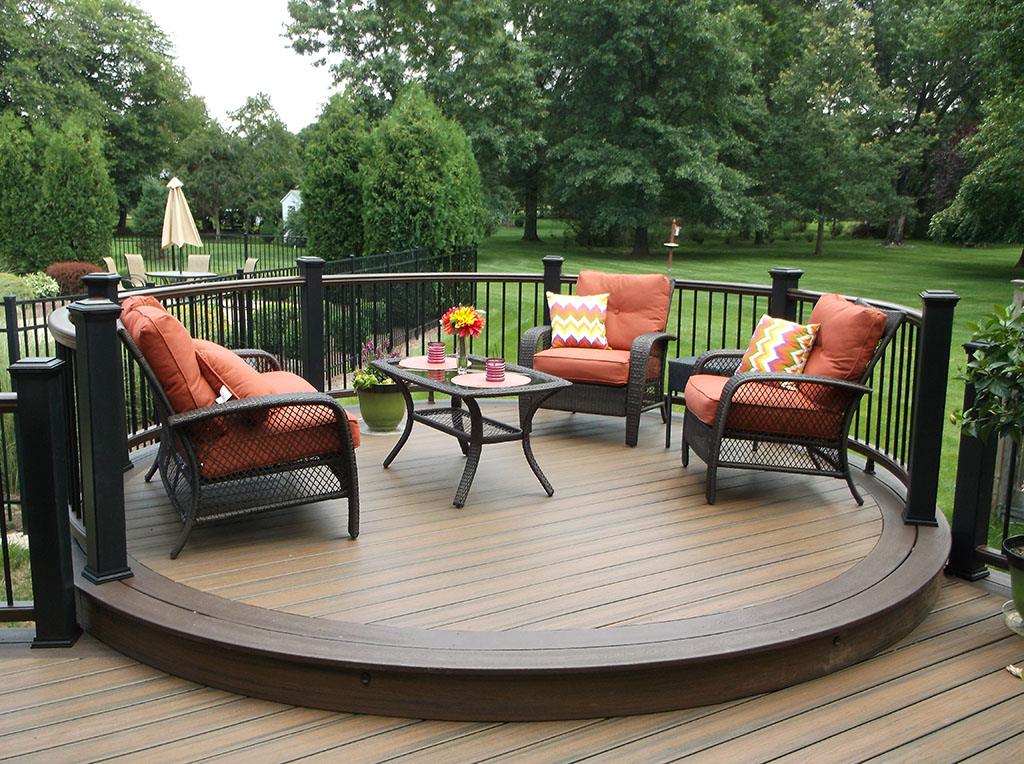
If you prioritize low maintenance, composite decking is the most practical choice for Chester County’s climate. Products from established manufacturers carry strong warranties against fading, staining, and structural defects.
If budget is the primary constraint, pressure-treated lumber remains a durable option, provided it is properly sealed and maintained annually.
Pros and Cons of Hiring a Local Deck Builder vs. a Regional Chain
Local Residential Deck Contractor
Pros:
- Familiar with Chester County municipal permit offices and inspectors
- Easier to verify reputation through local references
- More likely to be personally accountable to community reputation
- Faster response for post-completion issues
Cons:
- May have smaller crews and longer lead times during peak season
- Some lack manufacturer certifications for premium composite brands
Regional or National Deck Construction Company
Pros:
- Consistent processes and established project management systems
- Manufacturer certifications often included
- May carry broader insurance coverage
Cons:
- Less familiarity with individual municipality quirks
- Communication may route through call centers rather than local project managers
- Warranty claims can be slower to resolve
Do’s and Don’ts for Chester County Deck Projects
Do:
- Pull a permit before any construction begins
- Verify your contractor’s PA HIC registration number
- Ask specifically whether footing depth meets the Pennsylvania frost line requirement (typically 36 inches)
- Get all material specifications in writing, including brand names and grades
- Walk the completed project with your contractor before making the final payment
Don’t:
- Pay more than 15% upfront before materials are ordered
- Assume a verbal quote is binding
- Skip the final inspection even if the deck looks finished
- Choose the lowest bid without understanding why it is lower
- Allow construction to start without seeing a copy of the approved permit
A Downingtown Homeowner’s Deck Project
The following is a representative scenario based on common experiences reported by Chester County homeowners — names are illustrative.
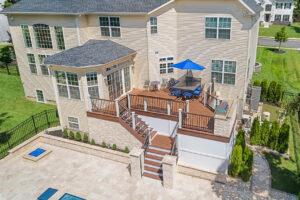
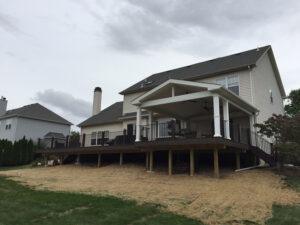
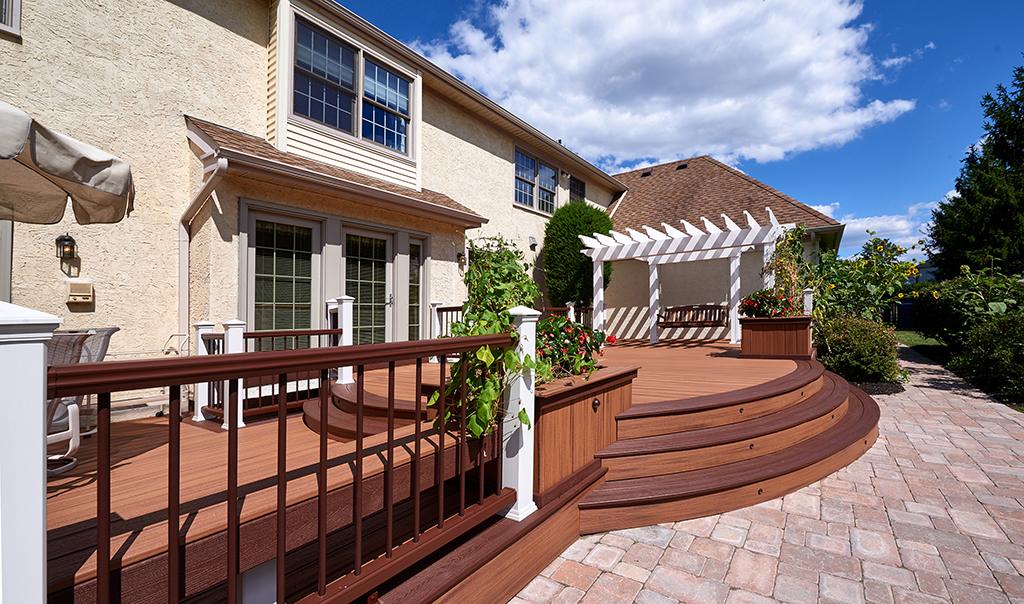
A homeowner in Downingtown hired a deck builder in Chester County PA for a 400-square-foot composite deck with built-in lighting and a pergola. The contractor handled the permit application with East Caln Township, submitted stamped drawings, and scheduled the footing inspection before pouring concrete. The project took approximately three weeks from groundbreaking to final inspection. The homeowner noted that the permit process added about ten days to the timeline but gave them confidence during the home’s later appraisal, when the deck was listed as a permitted improvement. Industry guidance, such as the National Association of Realtors’ Remodeling Impact Report, consistently supports the idea that permitted improvements carry more demonstrable value than unpermitted ones.
Quick Answers — FAQ
Q: Do I need a permit for a deck in Chester County, PA?
A: Almost certainly yes. Pennsylvania’s Uniform Construction Code applies across Chester County, and virtually all new decks require a building permit. Contact your specific municipality’s building department to confirm.
Q: How much does a deck cost in Chester County PA?
A: Costs depend on size, material, and design complexity. Reviewing a guide to deck installation costs in Pennsylvania can help set realistic expectations. Pressure-treated decks generally start around $25–$40 per square foot installed; composite decks typically range from $45–$80 per square foot or higher for premium materials. These are general ranges — get itemized quotes for accuracy.
Q: How do I verify a deck contractor is licensed in Pennsylvania?
A: Check the PA Home Improvement Contractor (HIC) registry through the Pennsylvania Office of Attorney General’s Bureau of Consumer Protection website. Registration is required for any contractor doing home improvement work over $500.
Q: What is the frost line depth in Chester County PA?
A: The frost line in Chester County is generally considered to be 36 inches. Deck footings must extend below this depth to prevent heaving during freeze-thaw cycles. Your building official or contractor can confirm the requirement for your specific municipality.
Q: How long does the permit process take in Chester County?
A: Plan review typically takes one to four weeks depending on the municipality and current workload. Your contractor should factor this into the project timeline before scheduling a start date.
Q: What is the difference between composite and pressure-treated decking?
A: Pressure-treated lumber is wood chemically preserved against rot and insects; it requires regular sealing and maintenance. Composite decking is made from wood fiber and plastic; it resists moisture, fading, and insects with minimal maintenance, but costs more upfront.
Q: Can a deck contractor pull the permit on my behalf?
A: Yes. A licensed PA HIC-registered contractor can submit permit applications on behalf of the homeowner in most Chester County municipalities. Confirm this is part of their standard scope of work.
Q: What inspections are required for a deck in Pennsylvania?
A: At minimum, a footing inspection before concrete is poured and a final inspection upon completion are standard. Some municipalities also require a framing inspection. Your building official will specify requirements when the permit is issued.
Q: Does a deck increase my property value?
A: Industry research and guidance from appraisal organizations suggest that a permitted, well-built deck adds measurable value to a home. The return varies by material quality, design, and local market conditions.
Q: What should I look for in deck builder reviews near me?
A: Focus on reviews mentioning permit management, crew professionalism, material quality, timeline adherence, and how the contractor handled problems. A pattern of positive reviews across multiple platforms carries more weight than any single review.
Glossary of Terms
PA UCC (Pennsylvania Uniform Construction Code): The statewide building code framework that governs residential and commercial construction in Pennsylvania, including deck projects. It incorporates the International Residential Code (IRC) as a primary reference.
HIC Registration (Home Improvement Contractor Registration): A registration required by the Pennsylvania Attorney General’s Bureau of Consumer Protection for any contractor performing home improvement work valued at $500 or more. It is not a license but provides consumer protection mechanisms.
Frost Line: The maximum depth at which the ground is expected to freeze in a given geographic area. Deck footings must be installed below the frost line to prevent movement caused by freeze-thaw expansion — in Chester County, typically 36 inches.
Ledger Board: A horizontal structural member that attaches a deck directly to the house’s rim joist or band joist. Proper ledger attachment, including flashing to prevent water intrusion, is one of the most critical — and most commonly failed — elements in deck construction inspections.
Conclusion: Build Right the First Time
A deck is one of the most valuable improvements you can make to a Chester County home — but only when it is built correctly, permitted properly, and constructed by a qualified professional. Cutting corners on permitting or contractor selection creates financial, legal, and safety risks that far outweigh any short-term savings.
Whether you are comparing materials, searching for the best deck builders in Pennsylvania, or simply trying to understand what a permit requires in your township, the steps laid out here give you a clear, factual foundation. Take the time to verify credentials, get written quotes, and confirm that permitting is part of the scope. Your deck should add value and enjoyment for decades — and a properly permitted, well-built structure will do exactly that.
Ready to start? Contact a licensed deck builder serving Chester County PA today. Ask for proof of PA HIC registration, current insurance certificates, and a copy of their most recent permit approvals before any work begins.