
KEY TAKEAWAYS
- Deck installation cost in Pennsylvania usually runs $25 to $60 per square foot installed.
- A 12×16 pressure-treated deck often lands between about $4,800 and $7,700.
- Composite costs more upfront but cuts staining and sealing work for decades.
- Raised decks, stairs, and premium railings can add thousands to any quote.
- Always confirm a builder’s PA Home Improvement Contractor registration before signing.
- Compare at least three written quotes that list materials, permits, and timelines.
Ask three Pennsylvania deck builders for a price and you may get three very different numbers. That gap confuses a lot of homeowners, and it is the main reason people either overpay or hire the wrong crew.
This guide breaks down the real deck installation cost in Pennsylvania for 2026. You will see prices by deck size and material, what pushes a quote up, how to compare builders, and how to plan a budget that holds up once work starts.
Whether you live in Bucks County, the Lehigh Valley, or outside Pittsburgh, the same cost drivers apply. Local labor rates and permit rules shift the final number, but the math behind a fair quote stays the same.
What Drives Deck Installation Cost in Pennsylvania
A deck price is not just boards. Every quote is a bundle of materials, framing, footings, labor, permits, and finishing details. Understanding each piece helps you spot a padded estimate or a corner being cut.
Material choice
Material is the single biggest lever. Pressure-treated pine is the budget option. Cedar sits in the middle and offers natural beauty. Composite and PVC cost the most upfront but need far less upkeep over time. If you are unsure which path is right for your home, start by comparing the long-term value of different decking materials.
Size and shape
Larger decks cost more in total but often less per square foot, because setup costs get spread across more area. Curves, angles, and multi-level designs add labor and waste, which raises the price.
Height and site conditions
A ground-level deck on flat ground is the simplest build. Raised and second-story decks cost significantly more because they need taller posts, heavier beams, deeper footings, and more railing. Sloped yards, rocky soil, and tight access also add time.
Railings, stairs, and extras
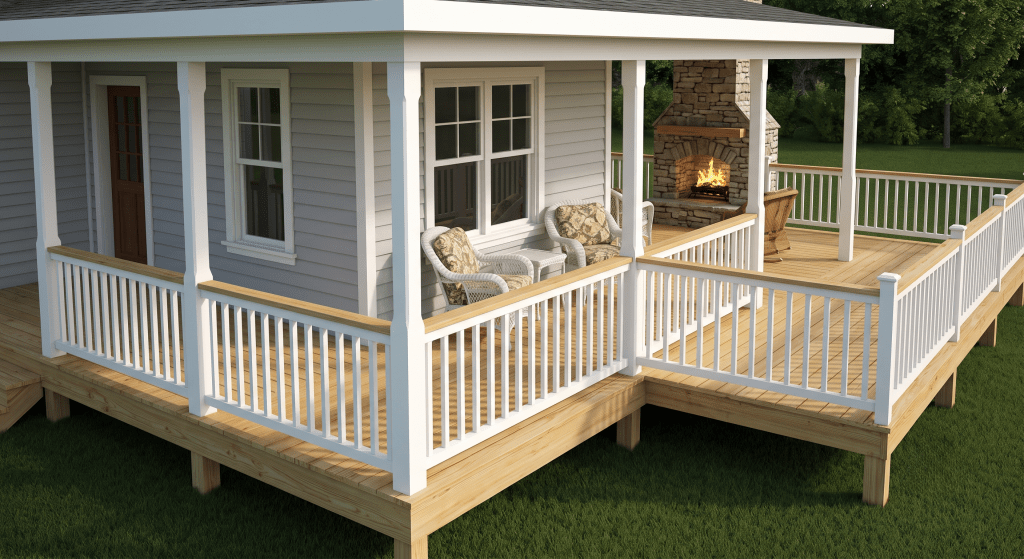
Railings are often underestimated. Basic wood railing is affordable, while composite, aluminum, cable, or glass railing can add thousands. Stairs, built-in benches, lighting, and skirting all add to the total as well. For help navigating these options, check out our guide on choosing the right railing for style and safety.
Permits and code requirements
Most Pennsylvania municipalities follow the Pennsylvania Uniform Construction Code guidelines, overseen by the Pennsylvania Department of Labor & Industry. Attached decks and raised decks usually need a permit and inspections. Permit fees vary by township, so ask your builder to include them in the quote.
2026 Deck Prices by Size in Pennsylvania
The table below shows planning estimates for ground-level decks with standard railing. Use it to set a realistic budget range before you request quotes. It is not a substitute for a site visit.
| Deck Size | Square Feet | Pressure-Treated (Installed) | Composite (Installed) |
|---|---|---|---|
| 10×10 | 100 | $2,500 to $4,000 | $4,000 to $6,000 |
| 12×12 | 144 | $3,600 to $5,800 | $5,800 to $8,600 |
| 12×16 | 192 | $4,800 to $7,700 | $7,700 to $11,500 |
| 16×20 | 320 | $8,000 to $12,800 | $12,800 to $19,200 |
| 20×20 | 400 | $10,000 to $16,000 | $16,000 to $24,000 |
| 20×24 | 480 | $12,000 to $19,200 | $19,200 to $28,800 |
Estimates assume roughly $25 to $40 per square foot for pressure-treated and $40 to $60 for composite. For a more granular look at pricing, refer to our detailed breakdown of deck installation costs per square foot. Raised decks, premium railings, stairs, and difficult sites will push totals higher.
If you want a quick sense of where your project falls, multiply your square footage by the low and high end of your material range. Then add room for railings and stairs.
Pressure-Treated vs. Composite: Which Is Worth It?
This is the decision that shapes your budget most. Neither option is “right” for everyone.
Pressure-Treated Wood
Pros
- Lowest upfront cost
- Easy to repair and replace boards
- Widely available from local suppliers
Cons
- Needs cleaning, staining, or sealing on a regular schedule
- Can warp, crack, or splinter over time
- Shorter useful life than most composites
Composite Decking
Pros
- Very little maintenance beyond washing
- Resists rot, insects, and splintering
- Holds color and finish for many years
Cons
- Higher upfront cost, often well above wood
- Can get hot in direct summer sun
- Repairs may require matching discontinued colors
If you plan to sell within five years and want the lowest entry cost, choose pressure-treated wood. If you plan to stay long term and hate weekend maintenance, composite usually pays for itself in saved time and upkeep.
If your deck gets heavy shade and moisture, as many wooded Pennsylvania lots do, composite or PVC is often the safer pick because it resists rot and mildew better than untreated wood surfaces.
How to Get an Accurate Deck Quote: Step by Step
Follow these steps to get quotes you can actually compare.
- Measure your space. Note the length, width, and height off the ground. Photos of the area help builders give better early estimates.
- Pick a material tier. Decide between pressure-treated, cedar, or composite before you call, so quotes are apples to apples.
- Check your local permit rules. Call your township or borough building office to learn what permits and inspections apply.
- Shortlist three builders. Look for top rated deck builders in PA with recent local projects and strong deck contractor reviews. You can read verified homeowner testimonials to gauge reliability.
- Verify registration and insurance. Confirm each builder’s Pennsylvania Home Improvement Contractor registration with the Office of Attorney General, and ask for proof of liability insurance. Use our guide to verify your builder’s license and insurance status.
- Request itemized written quotes. Each quote should list materials, labor, railings, stairs, permits, cleanup, and the timeline.
- Compare scope, not just price. A cheaper quote that skips footings, flashing, or permits can cost far more later.
- Read the contract before signing. Pennsylvania law requires home improvement contracts to include specific details, including a right to cancel within three business days.
How to Choose the Best Deck Builders in Pennsylvania
Searching “deck builders near me” will return dozens of names. Narrowing that list takes a few smart checks.
Start with deck contractor reviews on Google and other trusted platforms. Look for patterns, not single complaints. Reviews that mention clean job sites, clear communication, and on-time finishes are a good sign.
Ask to see a portfolio of local work, ideally from your area of Pennsylvania. You can browse our portfolio of custom deck projects to see examples of quality craftsmanship. Builders who have worked in your township will already know its permit process and inspection quirks.
Do / Don’t When Hiring a Deck Builder
Do
- Get every quote and promise in writing
- Ask how they handle footings, flashing, and ledger attachment
- Confirm who pulls the permit and schedules inspections
- Ask about warranty coverage on both labor and materials
Don’t
- Pay a large deposit before materials arrive
- Hire anyone who refuses to provide a registration number
- Choose based on the lowest number alone
- Skip the permit to save a few hundred dollars
The American Wood Council publishes widely used prescriptive guidance for residential deck construction. Asking whether a builder follows industry-standard framing and attachment guidelines is a fair question, and good builders will welcome it.
Real-World Scenario
A homeowner in Bucks County wants a 16×20 deck off the back of the house, about 3 feet off the ground, with one set of stairs.
They first priced pressure-treated wood, which fell in the $8,000 to $12,800 range before upgrades. Their family planned to stay at least 15 years, and the yard is heavily shaded. After comparing the cost of staining every few years, they chose a mid-grade composite.
Their final quote landed in the upper composite range once composite railing and stairs were added. Because they compared three itemized quotes, they caught that one bid left out the permit and footing inspection. That omission alone could have caused delays or a failed inspection.
The lesson: the right quote is the most complete one, not the cheapest one.
Quick Answers:
How much does a deck cost in Pennsylvania in 2026?
A: Most decks cost about $25 to $60 per square foot installed in Pennsylvania. Pressure-treated wood sits at the low end, while composite and raised decks sit at the high end.
How much does a 12×16 deck cost in PA?
A: A 12×16 pressure-treated deck often runs about $4,800 to $7,700 installed. The same size in composite usually falls between about $7,700 and $11,500.
Do I need a permit to build a deck in Pennsylvania?
A: Most attached or raised decks need a permit under the Pennsylvania Uniform Construction Code. Rules vary by municipality, so check with your local building office.
Is composite decking worth the extra cost?
A: Composite is often worth it if you plan to stay long term and want low maintenance. Wood makes more sense when upfront budget matters most.
How long does deck installation take?
A: A simple ground-level deck can take a few days to about two weeks once permits are approved. Larger or raised decks take longer, and weather can add delays.
What is the best time of year to build a deck in Pennsylvania?
A: Spring through fall offers the best building conditions. Booking builders in late winter often secures better scheduling before the busy season.
How do I find top rated deck builders in PA?
A: Check recent reviews, local project portfolios, and Home Improvement Contractor registration. Compare at least three itemized quotes before deciding. To streamline this process, follow our complete guide on how to hire a deck contractor.
Does a deck add value to a home?
A: A well-built deck can improve outdoor living space and buyer appeal. Industry cost-versus-value studies, such as those from Remodeling magazine, track national data on home improvement ROI and how much of the cost homeowners recoup at resale.
Glossary of Terms
- Footing: A concrete base set below the frost line that supports a deck post and keeps the structure from shifting.
- Ledger board: The board that attaches a deck to the house. Proper flashing here prevents water damage to your home.
- Joist: A horizontal framing member that runs under the deck boards and carries the load of people and furniture.
- Composite decking: Boards made from a blend of wood fibers and plastic, designed to resist rot and need less maintenance than wood.
Conclusion
Understanding deck installation cost in Pennsylvania puts you in control of the conversation with builders. Pressure-treated wood keeps upfront costs low, while composite trades a higher price for years of easy upkeep. Size, height, railings, and permits shape the rest of your budget.
The smartest move is to compare itemized quotes from registered, well-reviewed builders who know your local code. That protects your budget and your home.
Ready to plan your deck? Request your free, itemized quote today from a trusted Pennsylvania deck builder and see exactly what your project will cost before you commit.