
Key Takeaways
- A free deck estimate should include measurements, materials, labor, and permit costs in writing.
- Free means no charge for the visit and pricing, not free design work.
- Collect at least three quotes before you sign anything.
- Verify licensing and insurance before letting anyone onto your property.
- The cheapest deck installation estimate often skips permits, footings, or cleanup.
- Ask whether the price is fixed or an allowance that can change later.
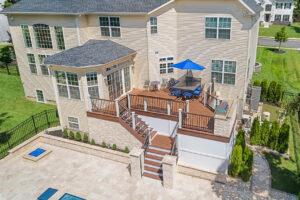
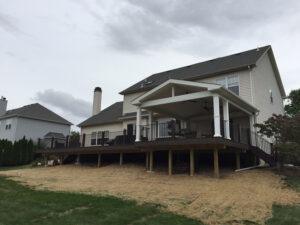
Almost every homeowner starts the same way: searching for local deck builders near me, then wondering if that first conversation is going to cost money. It usually doesn’t. A free deck estimate is standard practice across most of the United States, and contractors treat it as part of the sales process rather than a billable service.
But “free” covers a wide range. One builder hands you a single number scribbled on a business card. Another sends a six-page document with material specs, a permit line item, and a payment schedule. Both are free. Only one is useful.
This guide walks through what a real estimate should contain, how to get one without wasting your afternoon, and how to compare offers so you’re judging value instead of just price.
What “Free Estimate” Actually Means
When a contractor advertises a free quote, they’re offering to visit your property, take measurements, discuss what you want, and give you a price. No invoice for their time.
What’s usually not included for free:
- Detailed 3D renderings or CAD drawings
- Engineered structural plans per industry standards
- Permit applications filed on your behalf
- Soil testing or drainage assessments
Some builders will do a rough sketch at no cost. Formal design work is typically a separate paid service, sometimes credited back if you sign the contract. Ask upfront so nothing surprises you later.
The other thing worth understanding: an estimate is not a bid, and a bid is not a contract. An estimate is an educated projection. A fixed-price bid commits the contractor to a number. Ask which one you’re holding.
How to Get a Free Deck Estimate: 7 Steps
1. Define what you actually want.
Rough size, preferred material, and whether you need stairs, railings, or built-in seating. You don’t need final answers, but “somewhere around 16 by 20, probably composite” gives a builder far more to work with than “a deck.”
2. Set a realistic budget range.
Contractors ask this and homeowners often refuse to answer. Sharing a range helps them steer you toward materials that fit instead of pricing a project you’ll never approve.
3. Build a shortlist of three to five local builders.
Pull names from Google Business Profiles, the Better Business Bureau, and reviews from past clients in your area. Prioritize companies that actually operate in your area and know your local code requirements.
4. Verify licensing and insurance before scheduling.
Confirm your builder is properly licensed and ask for a certificate of insurance. Most state contractor licensing boards let you verify a license online in under a minute. You can also review Pennsylvania’s home improvement consumer protection guidelines for additional safety tips.
5. Schedule on-site visits, not phone quotes.
A price given over the phone is a guess. The builder needs to see your grade, soil, access points, and where the deck ties into the house.
6. Ask the same questions of every builder.
Consistency is what makes quotes comparable. Use the checklist further down this article.
7. Get everything in writing.
A verbal number means nothing. Request a detailed written estimate with line-item pricing and an expiration date.
What a Complete Estimate Should Include
| Line Item | What to Look For | Red Flag |
|---|---|---|
| Deck dimensions | Exact square footage and height above grade | “Approx.” with no numbers |
| Framing material | Species, treatment level, joist spacing | Not mentioned at all |
| Decking surface | Brand and product line, not just “composite” | Generic material description |
| Footings | Depth, diameter, and count | Omitted entirely |
| Railings and stairs | Type, linear footage, tread count | Bundled into one lump sum |
| Permits | Whether included and who files | “Homeowner responsible” with no cost noted |
| Labor | Separated from materials | Single combined number |
| Timeline | Start window and working days | No dates given |
| Payment schedule | Deposit percentage and milestones | Large upfront deposit demanded |
| Warranty | Workmanship term plus manufacturer coverage | Verbal promise only |
| Cleanup and disposal | Included or excluded, stated clearly | Silent on the topic |
If a quote is missing four or more of these rows, it isn’t an estimate. It’s a placeholder.
Free Estimates: Pros and Cons
Pros
- Costs nothing but your time
- Gives you real pricing for your specific property
- Lets you evaluate communication style before committing
- Creates competitive pressure that often improves pricing
- Surfaces problems you didn’t know about, like drainage or footing depth
Cons
- Each visit takes 30 to 90 minutes
- Some builders use the visit as a high-pressure sales appointment
- Free estimates can be less detailed than paid design consultations
- Very low quotes may reflect corners being cut, not efficiency
- Scheduling multiple visits can stretch your timeline by two or three weeks
Do and Don’t
Do
- Be home for the walkthrough and ask questions while they measure
- Request references from projects completed in the last year
- Take notes on what each builder points out about your site
- Ask what would make the price go up mid-project
- Check that the quote lists a valid expiration date
Don’t
- Sign anything on the first visit
- Pay a deposit before you have a signed contract
- Accept a quote that lumps everything into one number
- Assume the lowest price is the best value
- Let anyone start work without proof of liability and workers’ compensation insurance
Reading Between the Lines on Price
Costs vary enormously by region, material, and site conditions. Anyone quoting you a national average without seeing your yard is guessing.
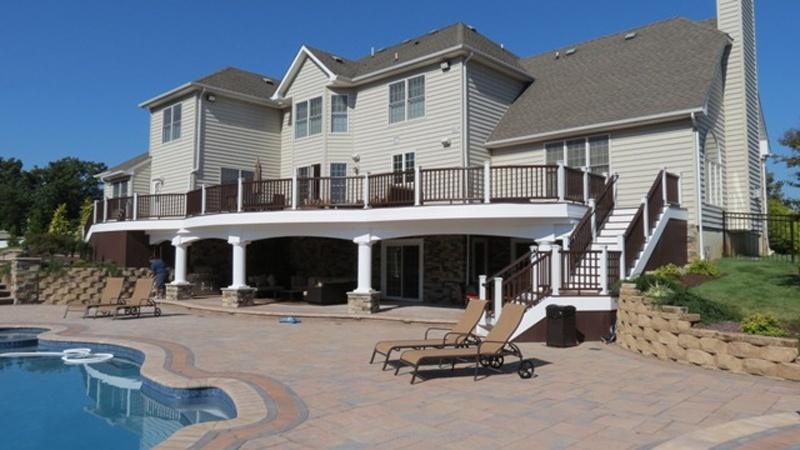
That said, the pattern behind typical deck installation costs in Pennsylvania is fairly consistent. Pressure-treated lumber sits at the low end. Cedar and redwood are in the middle. Low-maintenance composite and PVC decking options cost more upfront but need less maintenance over time. Elevated decks cost significantly more than ground-level ones because of footings, posts, beams, and stairs.
If your priority is the lowest upfront cost, pressure-treated framing with a treated surface is the standard choice, but budget for annual sealing.
If you plan to stay in the home for a decade or more, composite decking typically wins on total cost of ownership even though the initial deck installation estimate is higher.
If your yard slopes steeply or has poor drainage, expect the footing and framing portion of your quote to climb, and be suspicious of any builder who doesn’t mention it.
An online deck cost calculator is useful for setting expectations before you call anyone. Treat it as a range-finder, not a quote. It can’t see your soil, your grade, or your local code.
A Real-World Scenario
A homeowner in suburban Pennsylvania wanted a 16 by 20 composite deck off the back of a split-level. She collected three quotes.
The first was noticeably cheaper than the others. It listed materials and labor in one line and said nothing about permits. The second was mid-range and specified joist spacing at 16 inches on center, which is standard for many composite products but not all of them. The third was slightly higher and specified 12 inches on center, noting that her chosen decking brand required tighter spacing to maintain its warranty.
She called the decking manufacturer directly. The third builder was right. The cheapest quote would have voided the surface warranty and left her holding a permit she never applied for.
She hired the third builder. The lesson isn’t that expensive is better. It’s that the detail in the quote told her who had actually read the installation specs.
Questions to Ask During the Walkthrough
- Are you licensed and insured in this municipality?
- Will you pull the permit, or am I responsible?
- Who will be on site, employees or subcontractors?
- What’s your written workmanship warranty coverage?
- What happens to the price if you find rot or a footing problem?
- How many projects are you running at once right now?
- Can I see a deck you built two or three years ago?
That last one matters more than most people realize. Fresh work always looks good.
Quick Answers;
Is a free deck estimate really free?
A: Yes. Reputable builders don’t charge for a site visit and a written price. Formal design drawings or engineered plans may cost extra.
How many estimates should I get?
A: Three is the usual recommendation. That’s enough to spot an outlier without dragging the process out for a month.
How long does an on-site estimate take?
A: Typically 30 to 90 minutes, depending on deck complexity and how many questions you have.
How long is a deck quote valid?
A: Most quotes hold for 30 days. Lumber and composite pricing moves, so a stale quote often gets revised.
Do I need to be home for the estimate?
A: Yes, if you can. Being present lets you explain what you want and hear what the builder notices about your site.
Can I get an accurate quote online?
A: An online form or deck cost calculator gives you a ballpark. Nothing replaces a site visit for an accurate number.
Should I share my budget with the builder?
A: Sharing a range helps. It lets the builder match materials and scope to what you can actually spend.
What if all three quotes are wildly different?
A: That usually means they priced different scopes. Compare the line items, not the totals, and ask each builder to explain the gap.
Glossary of Terms
Footing
The concrete base beneath each deck post that transfers weight to stable soil. Depth requirements are set by local frost line codes.
Joist
A horizontal framing member that supports the deck surface. Spacing between joists affects how firm the deck feels underfoot.
Allowance
A placeholder dollar amount in a quote for an item not yet selected. If your final choice costs more, you pay the difference.
Change Order
A written amendment to the contract covering added work or materials. It should always include the revised price before work begins.
Conclusion
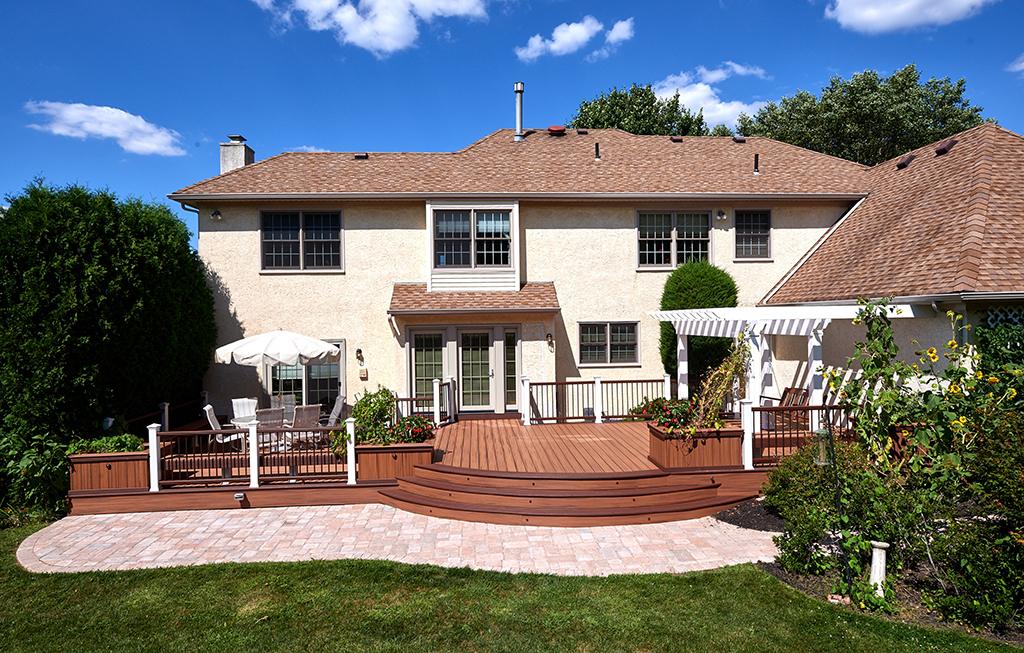
A free deck estimate costs you nothing except an hour of your time, and it’s the single best tool you have for avoiding a bad hire. The goal isn’t to collect the most quotes. It’s to collect quotes detailed enough to compare honestly.
Look at line items, not totals. Verify licensing before anyone steps on your property. Ask what could change the price, and get the answer in writing.
Ready to see what your project would actually cost? Schedule your complimentary on-site consultation and a written breakdown you can compare against anyone else’s.