Key Takeaways
- Knowing what to look for in a deck builder starts with license and insurance verification, not price.
- Always request certificates of insurance directly from the insurance carrier, never from the contractor.
- A builder who pulls permits is protecting you, not adding delay or cost.
- Deposits above roughly one third of the project value are a common warning sign.
- Written warranties should separate workmanship coverage from manufacturer material coverage.
- Get at least three detailed bids that specify materials, framing spacing and hardware.
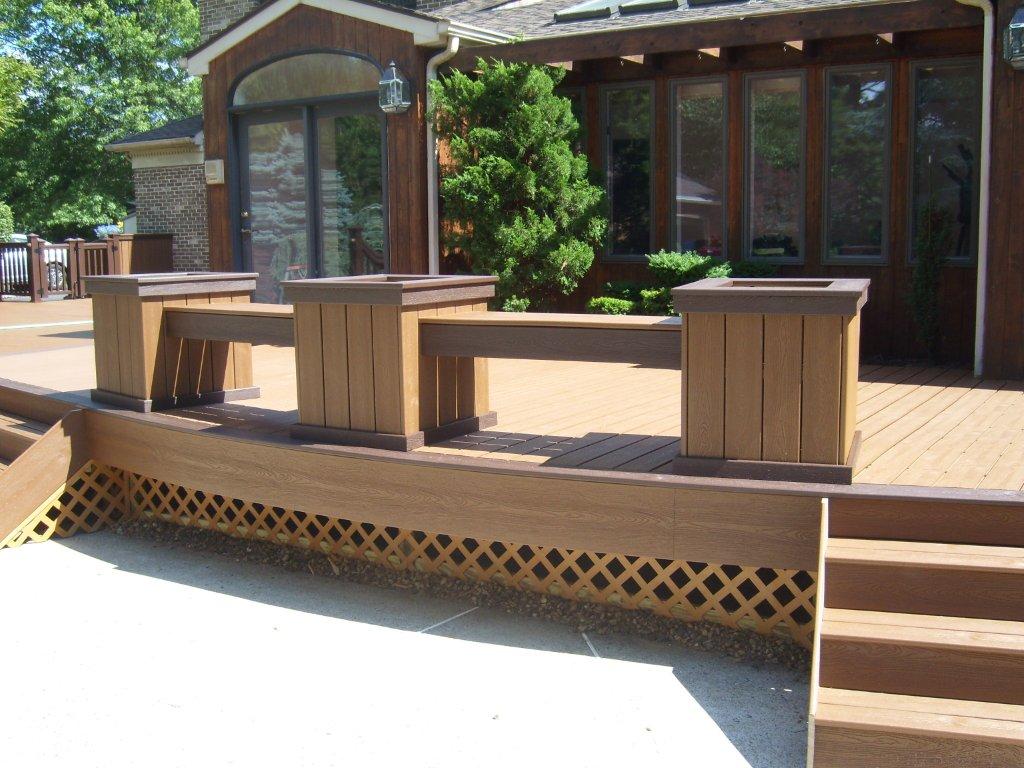
A deck is one of the few home improvements that carries real safety consequences. It holds people twelve feet off the ground, absorbs weather every day of the year, and fails quietly through hidden framing and fastener problems long before anyone notices. That is why knowing what to look for in a deck builder matters more than it does for interior work, where a bad job is mostly cosmetic.
This guide walks through the credentials to verify, the questions to ask a deck builder before you sign, the contract terms that protect you, and the specific warning signs that separate professionals from operators who will be unreachable in eighteen months. By the end you will have a checklist you can run through in a single afternoon. If you are unsure where to start, our complete guide on how to hire a deck contractor provides a broader overview of the process.
Start With Licensing, Because It Sets the Floor
Contractor licensing in the United States is handled at the state level, and in some cases at the county or municipal level. There is no single national license. Some states require a full contractor’s license with testing and bonding. Others require only registration, and a handful require almost nothing beyond a business filing.
Your first job is to find out which category your state falls into. State licensing boards publish this information and maintain public lookup tools where you can search a contractor by name or license number. For Pennsylvania homeowners, you can use Pennsylvania’s official license lookup tool to verify credentials instantly. The National Association of State Contractors Licensing Agencies is also a useful starting point for finding your state’s board.
Ask any builder for their license number directly, then look it up yourself. Two things matter beyond whether the license exists: whether it is currently active, and whether the classification actually covers deck construction. A specialty license for a different trade does not qualify someone to frame a structure. You can learn more about the differences between licensed vs unlicensed contractors in PA to understand the risks involved.
If your state only requires registration rather than licensing, the bar shifts. You will need to lean harder on insurance verification, references and permit history to judge competence.
Insurance Is the Part Most Homeowners Get Wrong
There are two policies that matter and they cover completely different risks.
General liability insurance covers property damage and injury to third parties. If a builder drops a beam through your sliding glass door or a delivery damages your driveway, this is the policy that responds. For more details on business insurance types, the Insurance Information Institute provides excellent resources.
Workers’ compensation insurance covers the builder’s own crew. This is the one homeowners overlook and the one with the largest downside. In many states, if an uninsured worker is injured on your property, liability can flow back to you as the property owner. Your homeowner’s policy may or may not respond, and it will almost certainly not respond generously. You can see how we prioritize site safety and maintain comprehensive coverage to protect our clients. You can see how we prioritize site safety and maintain comprehensive coverage to protect our clients on our insurance and safety page.
Here is the step most people skip: do not accept a certificate of insurance handed to you by the contractor. Ask for the insurance agent’s contact information and request that the certificate be sent to you directly by the agency, with your name listed as certificate holder. A PDF can be edited. A policy that lapsed three months ago still looks valid on paper.
The Nine-Step Vetting Process
Work through these in order. Each step filters out a different failure mode.
- Collect three to five candidates. Use referrals from neighbors with recent decks, then check local review platforms and the Better Business Bureau for complaint history. Learn how to spot fake reviews to ensure your research is accurate.
- Verify the license. Look it up on your state or county licensing portal. Confirm it is active and correctly classified. Use our guide to check if your deck builder is licensed for step-by-step instructions.
- Request insurance certificates from the carrier. Both general liability and workers’ compensation, sent directly by the agency.
- Ask who does the work. Some companies subcontract every job. That is not automatically bad, but subcontractors need their own insurance, and you should know who will actually be on your property. Understand the difference between in-house builders and subcontractors to know what to expect.
- Request three references from the last twelve months. Recent work matters more than a decade-old portfolio. Ask specifically for jobs similar in size and material to yours.
- Visit a completed deck if possible. Look underneath. Framing, joist hangers, ledger flashing and fastener quality tell you far more than the surface boards. You can inspect our framing and construction details in our portfolio to see what high-quality structural work looks like.
- Get detailed written bids. A bid that says “build deck, $28,000” is not a bid. It should specify decking material and brand, framing lumber species and grade, joist spacing, footing depth and diameter, railing system, hardware type, and what is excluded. Learn how to compare detailed bid specifications to ensure you are comparing apples to apples.
- Confirm permit responsibility in writing. The builder should pull the permit under their license.
- Review the contract line by line before signing. Payment schedule, start and completion dates, change order process, warranty terms, and lien waiver language.
Questions to Ask a Deck Builder
These questions surface information that bids and websites do not.
- How long have you been building decks under this business name?
- Are you pulling the permit, and is that cost included in the bid?
- What joist spacing are you using, and why that spacing for this decking material?
- How are you attaching and flashing the ledger board to my house?
- What footing depth are you using, and how does that relate to our local frost line?
- Who is my point of contact once work begins?
- What is your warranty on workmanship, in writing, and how does it differ from the material manufacturer’s warranty?
- What happens if the project runs past the completion date?
- Can you provide lien waivers as payments are made?
The ledger board question is deliberate. The connection between the deck and the house is where a disproportionate share of catastrophic deck failures originate. According to technical guidelines for ledger board attachment from the American Wood Council, proper flashing and fastening are critical for structural integrity. A builder who answers that question with detail about flashing, lag screws or through-bolts, and ledger spacers is showing you real competence. A builder who waves it off is telling you something too—be sure to watch for common warning signs when hiring.
Comparison: Types of Deck Contractors
| Factor | Licensed Specialty Deck Builder | General Contractor | Handyman or Unlicensed Crew |
|---|---|---|---|
| Licensing | State or local contractor license | State or local contractor license | Often none, or business registration only |
| Insurance | Liability and workers’ comp typical | Liability and workers’ comp typical | Frequently absent or liability only |
| Deck-specific expertise | High, builds decks continuously | Varies widely by firm | Unpredictable |
| Permit handling | Pulls permits routinely | Pulls permits routinely | May ask you to pull it yourself |
| Pricing | Mid to high | Mid to high | Lowest |
| Warranty | Written workmanship warranty common | Written warranty common | Verbal or none |
| Best for | Standalone deck projects of any size | Decks tied into larger renovations | Small repairs, board replacement |
If your project is a standalone deck, a specialty deck builder is usually the stronger choice because the crew builds decks every week rather than a few times a year. If your deck is part of a larger renovation involving an addition, roofline changes or interior work, a general contractor coordinating trades makes more sense.
Pros and Cons of Hiring the Lowest Bidder
Pros
- Lower upfront cost, which matters when budget is genuinely fixed
- Sometimes reflects lower overhead rather than lower quality, particularly with small owner-operator crews
- May offer faster scheduling if their calendar is open
Cons
- Often signals missing insurance, since coverage is a significant cost line
- Frequently reflects cheaper framing lumber, wider joist spacing or undersized footings you will not see
- Higher likelihood of change orders that erase the savings mid-project
- Warranty enforcement is difficult against a business that may not exist in two years
- Repair or replacement of a failed deck typically costs more than building it correctly once
When one bid is dramatically below the others, do not assume it is a bargain. Ask that builder to walk you through where the difference comes from. Sometimes the answer is legitimate. Often the answer reveals a spec difference you would not have caught.
Do and Don’t When Hiring a Deck Builder
Do
- Verify license and insurance independently before signing
- Insist on a written contract with a defined payment schedule
- Keep a written record of every change to scope
- Pay by check or credit card so there is a transaction trail
- Confirm final inspection is passed before the last payment
Don’t
- Pay a large deposit in cash
- Accept a verbal warranty
- Let work begin before the permit is issued
- Sign a contract with blank spaces or open-ended completion dates
- Hire someone who solicits door to door after a storm and pressures you to decide immediately
A Real World Scenario
A homeowner in suburban Pennsylvania collects three bids for a 400 square foot composite deck. Two come in around $32,000. The third comes in at $21,000 and the builder offers to start the following week if a $10,000 deposit is paid that day.
The homeowner asks for the license number and an insurance certificate. The builder says the certificate is in the truck and the license is “through a buddy’s company.” That single answer is disqualifying, because it means the person doing the work is not the person carrying the license or the liability.
The homeowner goes with a $32,000 bid instead. That builder pulls the permit, the township inspector flags the original footing depth as insufficient for local frost conditions during the inspection, and the footings are corrected before framing begins. The cost difference bought permit oversight, insured labor, and a correction that would have caused frost heave and structural movement within a few winters.
The lesson is not that expensive is better. It is that the permit and inspection process caught a real defect, and the low bidder had already signaled they intended to skip it.
Contracts, Permits and Payment Structure
Your contract should name the parties, describe the scope in specific terms, list materials with brands and grades, state a start date and a substantial completion date, define the change order process in writing, and lay out the payment schedule.
On deposits, use judgment rather than a fixed rule. Some states cap the deposit a contractor may collect. Where no cap exists, a deposit in the range of ten to thirty percent is common practice, with progress payments tied to milestones such as footings poured, framing complete, decking installed and final inspection passed. A demand for half or more of the total before any material arrives on site deserves a direct explanation.
Permits are not optional bureaucracy. Most jurisdictions require a permit for decks above a certain height or attached to the structure. An unpermitted deck creates problems at resale, can complicate an insurance claim after an incident, and removes the independent inspection that catches framing and footing errors. The International Code Council publishes the model codes most local jurisdictions adopt, and your local building department can tell you exactly which requirements apply to your address.
If your deck will be more than 30 inches above grade or attached to the house, assume a permit is required and verify with your building department. If you are replacing decking boards on existing framing with no structural change, a permit may not be needed, though it is still worth a phone call. For a deeper dive into the process, read our complete guide to hiring a deck contractor.
Quick Answers:
How do I verify a deck builder’s license?
A: Search your state or county contractor licensing board’s public database using the builder’s name or license number. Confirm the license is active and the classification covers deck or general construction work.
What insurance should a deck builder carry?
A: General liability and workers’ compensation. Request certificates directly from the insurance agency rather than accepting copies from the contractor.
How much deposit is normal for a deck project?
A: Ten to thirty percent is common where state law does not set a cap. Requests for half or more of the total before materials arrive warrant a direct explanation.
Who pulls the permit, me or the builder?
A: The builder should pull it under their own license. If a contractor asks you to pull the permit yourself, they may be avoiding liability or lack the license to do it.
How long should a deck warranty last?
A: Workmanship warranties commonly run one to five years. Composite decking manufacturers often provide separate material warranties of twenty five years or more. Get both in writing and understand the specifics of workmanship warranties.
Should I hire a specialty deck builder or a general contractor?
A: Choose a specialty deck builder for standalone deck projects. Choose a general contractor when the deck is part of a larger renovation requiring multiple trades.
What is the biggest red flag when hiring a deck builder?
A: Refusal or inability to produce license and insurance documentation, usually paired with pressure to pay a large deposit immediately.
How many bids should I get?
A: Three detailed written bids is the practical minimum. Compare specifications rather than headline prices.
Can I check a builder’s complaint history?
A: Yes. The Better Business Bureau and your state licensing board both maintain complaint records, and your state attorney general’s consumer protection office may as well.
Glossary of Terms
- Ledger board — The horizontal board that fastens the deck to the house framing. Improper attachment or flashing at the ledger is a leading cause of deck collapse.
- Certificate of insurance (COI) — A document issued by an insurance carrier confirming active coverage, policy limits and effective dates for a specific business.
- Lien waiver — A signed document from a contractor or supplier confirming they have been paid and waiving the right to place a mechanic’s lien on your property.
- Frost line — The maximum depth at which ground moisture freezes in a given region. Deck footings must extend below it to prevent seasonal heaving.
Conclusion
Choosing a deck builder is a documentation exercise before it is a taste exercise. Design, decking material and railing style all matter, but they only matter if the structure underneath is built to code by an insured crew who will still be reachable when a question comes up in year three.
Run the nine steps. Verify the license through the state board yourself. Get insurance certificates from the carrier, not the contractor. Read the contract before you sign it and make sure the permit responsibility is written down. Those four habits eliminate the overwhelming majority of bad outcomes in this trade.
If you are ready to move forward, request detailed written estimates from three licensed and insured builders in your area and compare them on specifications rather than price alone. Schedule your consultation to receive a written, fully specified estimate for your deck project.