When Pennsylvania homeowners start searching for professional deck installers, the instinct is often to type “Deck Builders Near Me” or “deck construction companies near me” into a search engine and pick whoever ranks first. But here’s the problem: search results are not a reliable measure of true local expertise. What makes a contractor “local” is a deeper question—and the answer has a direct impact on the quality, legality, and longevity of your new deck. This article walks you through every dimension of local contractor identity, from licensing requirements and regional building codes to community reputation and accountability. By the end, you’ll know exactly what to look for when hiring residential deck contractors in Pennsylvania, and why choosing a genuinely local professional is almost always the smarter investment.

Key Takeaways
• What makes a contractor “local” goes beyond zip code—it includes licensing, community ties, and regional knowledge.
• Pennsylvania has specific building codes, such as those outlined in the American Wood Council Deck Construction Guide, that local deck builders are trained to follow.
• Reading verified customer testimonials helps verify a contractor’s local reputation and track record.
• Local deck contractors often offer faster response times and personalized service.
• Always confirm insurance, permits, and references before signing any contract.
• If you need a customized design, a local specialist typically outperforms a national chain.
Defining “Local”: More Than a Mailing Address
Many homeowners assume that any company with a Pennsylvania phone number qualifies as local deck building services. That’s only partially true. A genuinely local contractor meets several interconnected criteria that go well beyond geography.
Physical Presence and Community Investment
A truly local contractor operates a physical office or workshop within the region they serve. They employ crews who live in the same communities as their clients. This means they have a real stake in the local economy and a reputational incentive to deliver quality work. National franchise operations or out-of-state companies chasing leads in Pennsylvania do not share this accountability. Industry organizations such as the National Association of Home Builders (NAHB) and the North American Deck and Railing Association (NADRA) consistently emphasize that locally-rooted contractors tend to produce higher client satisfaction scores, largely because their livelihood depends on referrals within a defined geographic area.
Knowledge of Pennsylvania-Specific Codes and Climate
Pennsylvania’s climate presents unique challenges for deck construction. The state experiences significant freeze-thaw cycles, heavy snowfall in many regions, and humid summers that accelerate wood decay. A professional deck installer who has worked exclusively in Pennsylvania understands how to select climate-appropriate decking materials, set proper footing depths below the frost line, and design drainage systems that protect the structure year-round. Local contractors also know Pennsylvania’s permit landscape. Requirements vary by county and municipality. A contractor based in Lancaster County, for example, will be familiar with that county’s inspection timelines and documentation requirements—knowledge that an out-of-state company simply cannot replicate.
Active Licensing and Insurance in the Commonwealth
Pennsylvania does not issue a single statewide contractor license, but many municipalities require registration, and home improvement contractors must be registered with the Pennsylvania Attorney General’s Office under the Home Improvement Consumer Protection Act (HICPA). A genuinely local contractor maintains these registrations and carries both general liability insurance and workers’ compensation coverage appropriate to Pennsylvania law.
How to Verify a Contractor’s Local Credentials: A Step-by-Step Guide
- Search the Pennsylvania Attorney General’s HICPA registry to confirm the company is registered under HICPA.
- Ask for the contractor’s physical business address and verify it with a quick map search. A P.O. box alone is a warning sign.
- Request proof of general liability insurance and workers’ compensation. Ask for a certificate of insurance naming you as an additional insured.
- Look up deck builder reviews near me on platforms such as Google Business Profile, the Better Business Bureau (BBB), and Houzz. Prioritize reviews from customers in your specific county or region.
- Ask for at least three local references, view featured local projects, and actually call them. Inquire about permit handling, crew professionalism, and how the contractor addressed any problems.
- Verify membership in trade organizations, looking for NADRA competition winner status, which often requires members to meet standards of professional practice.
Local vs. Non-Local Deck Contractors: A Side-by-Side Comparison
| Factor | Genuinely Local Contractor | Non-Local or National Chain |
|---|---|---|
| Pennsylvania Code Knowledge | Deep, county-level familiarity | Generic or outdated knowledge |
| Permit Handling | Manages local permits directly | May subcontract or skip permits |
| Material Sourcing | Regional suppliers; climate-appropriate | National catalogue; may be unsuitable |
| Accountability | Community reputation at stake | Limited post-project accountability |
| Response Time | Quick follow-up; nearby crew | Scheduling delays; travel time |
| References | Local homeowners you can visit | May be from other states |
| Licensing | PA-registered under HICPA | May not be registered in PA |
| Warranty Support | Accessible for warranty claims | Difficult to reach after project ends |
Pros and Cons of Hiring Local Deck Building Services
Pros
• Regional climate expertise leads to better material and structural decisions.
• Faster response times for consultations, repairs, and warranty issues.
• Stronger accountability driven by community reputation and referral business.
• Familiarity with local permit offices speeds up approvals.
• Supporting local businesses keeps money in the Pennsylvania economy.
Cons
• Smaller local firms may have longer lead times during peak season.
• Some local contractors may have limited design portfolios compared to larger companies.
• Pricing can vary significantly between local contractors, requiring careful comparison.
Do’s and Don’ts When Hiring Residential Deck Contractors in Pennsylvania
Do:
• Do verify HICPA registration through the Pennsylvania Attorney General’s Office.
• Do ask for a written contract that specifies materials, timeline, payment schedule, and warranty terms.
• Do request a permit for your deck. Any contractor who discourages this is a major red flag.
• Do check deck builder reviews near me from verified local customers before committing.
• Do get at least three written estimates from different local contractors.
Don’t:
• Don’t pay more than 10–15% upfront before work begins.
• Don’t assume that a company advertising “best deck builders in Pennsylvania” has been independently verified as such.
• Don’t skip the permit because it seems like extra paperwork—unpermitted decks can create serious problems when selling your home.
• Don’t hire a contractor who cannot provide a physical address and local references.
Choosing the Right Contractor for Your Specific Needs
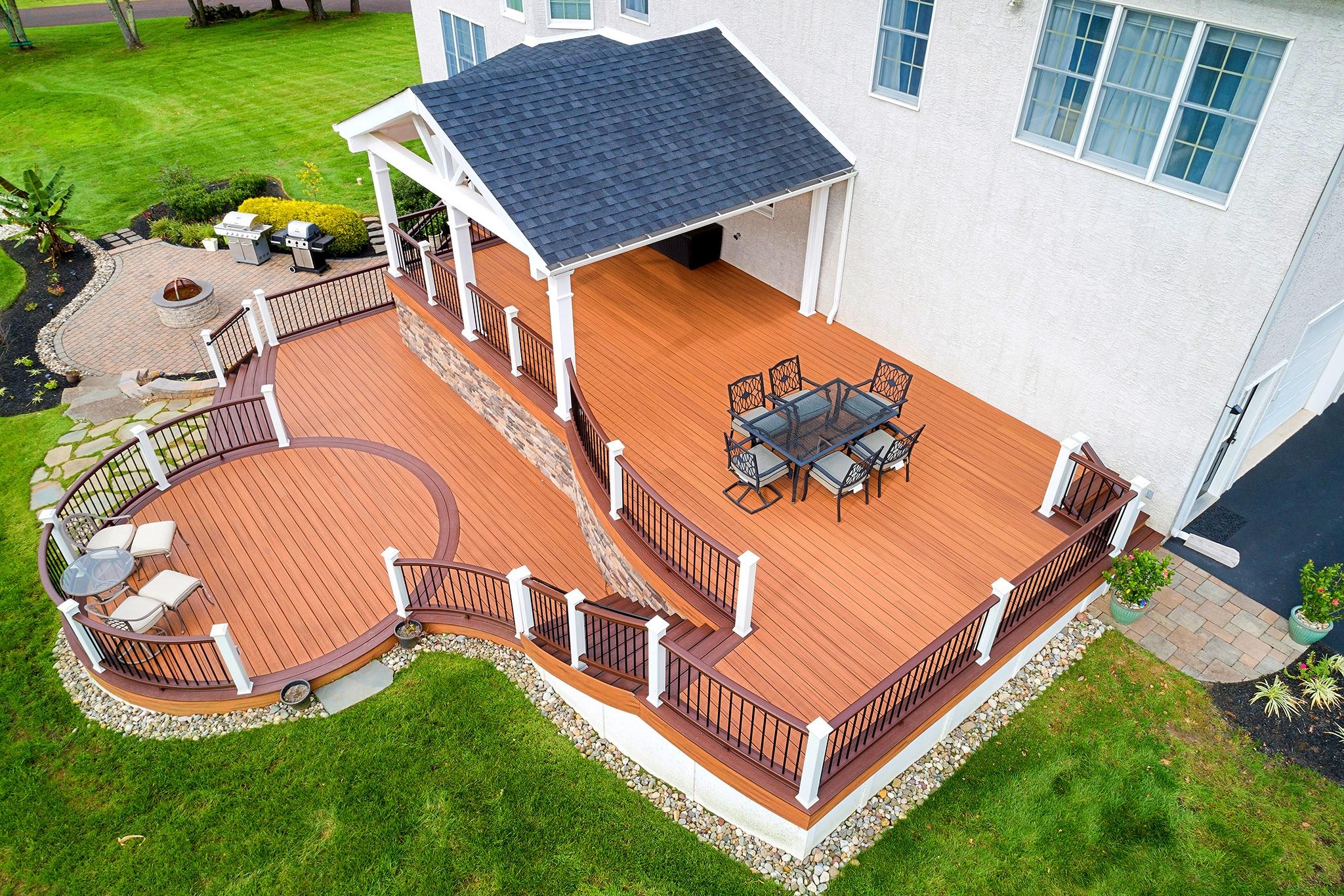
If you need a complex, custom-designed deck with multiple levels, built-in seating, or integrated lighting, choose a local specialist with a portfolio of comparable projects in Pennsylvania rather than a generalist or national brand. The design nuances and local material knowledge matter significantly for complex builds.
If you need a straightforward replacement or repair, check signs your deck needs rebuilding before deciding. A well-reviewed local deck construction company near you with a solid reputation for standard builds is typically the most cost-effective and reliable option. In this case, responsiveness and proximity matter more than portfolio depth.
If budget is a primary concern, review current decking cost estimates from licensed local contractors rather than gravitating toward the cheapest option found online. Industry experts suggest that the lowest bid often reflects shortcuts in materials or labor that become expensive problems within a few years.
Real-World Scenario: When “Local” Made the Difference
Hypothetical scenario: A homeowner in suburban Philadelphia hired an out-of-state contractor they found through an online advertisement promising the “best deck builders Pennsylvania” had to offer. The contractor pulled no permits, used wood species not rated for the freeze-thaw cycles common in the region, and was unreachable six months later when the decking began to warp. The homeowner faced a $4,000 repair bill and the expense of retroactively obtaining permits before selling the home. By contrast, a neighbor who hired a contractor registered with the Pennsylvania Builders Association, obtained all permits through the local township, and checked multiple deck builder reviews near me had a smooth project, passed inspection on the first visit, and received a five-year warranty backed by a company that still answers the phone.
Quick Answers: Frequently Asked Questions
What makes a contractor truly “local” in Pennsylvania?
A truly local contractor has a physical office in the region, employs local crews, is registered under Pennsylvania’s HICPA, carries state-appropriate insurance, and has verifiable references from homeowners in your area.
How do I find the best deck builders in Pennsylvania?
Search for a licensed deck contractor with strong Google reviews, check the BBB, verify HICPA registration, ask for local references, and confirm membership in trade organizations like NADRA or the Pennsylvania Builders Association.
Do I need a permit to build a deck in Pennsylvania?
In most Pennsylvania municipalities, yes. Permit requirements vary by county and township. A reliable local contractor will handle the permit application process as part of the project. Always insist on permits to protect your investment.
What should a deck construction contract include?
Your contract should specify the project scope, materials list, start and completion dates, payment schedule, warranty terms, permit responsibilities, and cleanup procedures. Never sign a vague or verbal-only agreement.
How much do deck builders in Pennsylvania typically charge?
Costs vary based on deck size, materials, design complexity, and location. Industry data suggests basic pressure-treated wood decks cost less per square foot than composite or hardwood options. Always request itemized estimates to compare accurately.
What is HICPA and why does it matter?
HICPA stands for the Home Improvement Consumer Protection Act. It requires home improvement contractors in Pennsylvania to register with the Attorney General’s Office. Hiring an unregistered contractor removes a key layer of legal consumer protection.
What trade organizations should I look for?
Look for membership in NADRA (North American Deck and Railing Association), the Pennsylvania Builders Association, or the National Association of Home Builders. These memberships signal professional standards and accountability.
Can I check deck builder reviews online?
Yes. Google Business Profile, the Better Business Bureau, Houzz, and Angi are reliable platforms. Focus on recent reviews from customers in your county or municipality for the most relevant feedback.
What is the frost line depth in Pennsylvania and why does it matter for decks?
The frost line in Pennsylvania ranges from about 30 to 48 inches depending on location. Deck footings must be set below this depth to prevent frost heave from destabilizing the structure. Local contractors know the exact depth required by your municipality.
What is the difference between a local deck builder and a national chain?
Local contractors have community accountability, regional code knowledge, and accessible warranty support. National chains may offer standardized pricing but often lack local permitting expertise and may use subcontractors with no regional experience.
Glossary of Key Terms
HICPA (Home Improvement Consumer Protection Act): A Pennsylvania law requiring home improvement contractors to register with the state Attorney General’s Office, providing consumers with legal recourse for disputes.
Frost Line: The maximum depth at which soil freezes in winter. Deck footings must extend below this depth to prevent structural movement caused by freeze-thaw cycles.
NADRA (North American Deck and Railing Association): A professional trade organization for deck builders and railing manufacturers that promotes safety standards and professional development in the industry.
Certificate of Insurance: A document issued by an insurance company confirming that a contractor carries liability and workers’ compensation coverage. Homeowners should request this before any work begins.
Conclusion: Choose Local, Choose Confidence
Hiring a deck contractor in Pennsylvania is not simply a transaction—it is a long-term investment in your property, your safety, and your peace of mind. What makes a contractor “local” is a combination of physical presence, community accountability, regional code expertise, proper licensing under HICPA, and a verifiable track record with neighbors who live near you. National search rankings and flashy advertisements do not guarantee quality. The best deck builders Pennsylvania has to offer are the ones who answer the phone, pull the permits, set footings at the right depth for your county’s frost line, and stand behind their work because their business depends on your recommendation to the next homeowner on your street. When you meet our local deck experts, you’ll see this commitment firsthand. Ready to start your deck project? Use the verification steps in this guide, read local deck builder reviews, confirm HICPA registration, and request written estimates from at least three professional deck installers in your area. Your ideal local deck contractor is closer than you think—and the right one will make all the difference.