

Finding reliable deck builders near me starts with one critical step: verification. Pennsylvania homeowners invest an average of $12,000 to $25,000 in deck projects, yet many skip the essential process of confirming their contractor’s credentials. Unlike states with mandatory contractor licensing boards, Pennsylvania uses a Home Improvement Contractor (HIC) registration system that creates unique verification challenges. This guide walks you through every step of validating licenses, checking credentials, and protecting your investment when hiring deck construction companies near me. You’ll learn which documents to request, which databases to search, and which warning signs mean you should walk away.
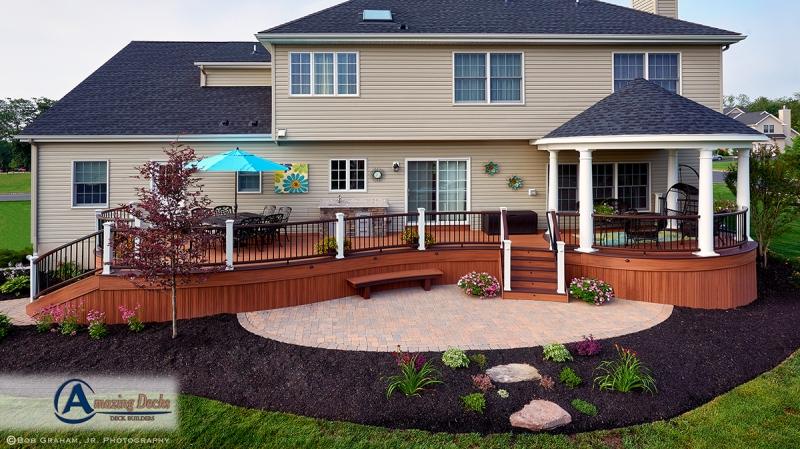
Key Takeaways
Essential Points for Hiring Licensed Deck Contractors
- Pennsylvania requires contractors to register with the Attorney General’s Office for projects over $5,000
- Licensed deck contractors carry proper insurance and comply with local building codes
- Verification through official databases protects homeowners from fraud and poor workmanship
- Professional deck installers Pennsylvania offer warranties ranging from 1 to 10 years
- Hiring unlicensed contractors can void permits and reduce property value by 10–15%
- Request three written estimates and compare credentials before signing contracts
Understanding Pennsylvania’s Contractor Registration System
Pennsylvania doesn’t issue traditional contractor licenses for most trades. Instead, the state requires Home Improvement Contractor registration through the Office of Attorney General. Any contractor performing work valued at $5,000 or more must register and renew biennially.
What HIC Registration Means
Registration confirms a contractor has submitted basic business information and paid required fees. It does not verify competency, financial stability, or work quality. Licensed deck contractors must provide proof of liability insurance when registering, but the state doesn’t validate insurance coverage remains active.
The Difference Between Registration and Licensing
Registration requires paperwork and fees. Licensing requires testing, continuing education, and demonstrated expertise. Pennsylvania’s system falls into the registration category, placing more responsibility on homeowners to verify qualifications beyond state registration.
For official details, refer to the Pennsylvania’s official Home Improvement Contractor guidelines.
Step-by-Step Verification Process for Deck Contractors
Follow this sequence to thoroughly vet residential deck contractors before hiring.
Step 1: Confirm HIC Registration
Visit the Pennsylvania Attorney General’s website and search the Home Improvement Contractor Registry. Enter the contractor’s business name or HIC number. Verify the registration is current and note the expiration date.
Step 2: Verify Insurance Coverage
Request certificates of insurance directly from the contractor. Call the insurance company listed to confirm the policy is active. Require both general liability ($1 million minimum) and workers’ compensation coverage. Reputable builders like ours demonstrate this commitment through our insurance and safety standards.
Step 3: Check Local Business Licenses
Contact your municipality’s licensing department. Many Pennsylvania townships and boroughs require separate business licenses or permits beyond state registration.
Step 4: Search Legal Complaints
Search the Attorney General’s Bureau of Consumer Protection database for complaints. Check local court records for liens or judgments against the contractor.
Step 5: Validate References and Past Work
Request three recent references from projects similar in scope to yours. Visit completed deck projects if possible to assess quality firsthand. Reviewing verified customer experiences can also offer peace of mind.
Step 6: Verify Bonding Status
Ask if the contractor carries a surety bond. While not required in Pennsylvania, bonded contractors demonstrate additional financial responsibility.
Step 7: Confirm Building Code Knowledge
Ask contractors about their familiarity with Pennsylvania’s Uniform Construction Code and local amendments. Professional deck installers should reference specific code requirements during estimates.
Comparison: Licensed vs. Unlicensed Deck Contractors
| Factor | Licensed/Registered Contractor | Unlicensed Contractor |
|---|---|---|
| Legal Compliance | Registered with PA Attorney General | Operating illegally for projects over $5,000 |
| Insurance | Carries liability and workers’ comp | Often uninsured or underinsured |
| Permit Handling | Obtains necessary building permits | May skip permit process entirely |
| Warranty | Offers written warranties (1–10 years) | Rarely provides written guarantees |
| Recourse for Problems | Bonded; can file complaints with state | Limited legal recourse options |
| Average Cost | Market rates with transparency | Often 20–30% cheaper upfront |
| Project Timeline | Adheres to agreed schedules | Frequently abandons or delays projects |
| Quality Standards | Follows building codes and best practices | Inconsistent quality; shortcuts common |
Pros and Cons of Hiring Different Contractor Types
Pros of Licensed Deck Contractors
- Legal protection: State registration creates accountability and complaint channels
- Insurance coverage: Your property and workers are protected during construction
- Code compliance: Work meets safety standards and passes inspections
- Professional network: Access to quality suppliers and subcontractors—like those behind our award-winning NADRA deck
- Written contracts: Clear terms, timelines, and payment schedules
- Warranty coverage: Defects and structural issues are addressed post-completion
Cons of Licensed Deck Contractors
- Higher upfront costs: Legitimate insurance and registration expenses are passed to customers
- Stricter scheduling: Professional contractors book months in advance during peak season
- More documentation: Multiple forms, permits, and agreements require time to review
Pros of Unlicensed Contractors
- Lower initial quotes: Reduced overhead can mean cheaper estimates
- Faster availability: Often available immediately or with short notice
Cons of Unlicensed Contractors
- No legal recourse: Limited options if work is substandard or incomplete
- Insurance gaps: Homeowner’s insurance may not cover accidents involving unlicensed workers
- Permit violations: Building without permits can result in fines and forced removal
- Quality uncertainty: No standardized competency verification
- Project abandonment: Higher risk of incomplete work with no recovery options
Do’s and Don’ts When Hiring Deck Builders
Do’s
Do request and verify the contractor’s HIC registration number before any discussion of project details
Do obtain at least three written estimates that itemize materials, labor, permits, and timelines
Do insist on a detailed written contract that includes payment schedules tied to milestones, not upfront lump sums
Do verify that your contractor will obtain all necessary building permits and schedule required inspections
Do ask deck builder reviews near me and check online platforms like Better Business Bureau for complaint histories
Do require proof that the contractor carries current insurance before work begins
Do confirm the contractor will provide material specifications and brand names in writing
Don’ts
Don’t pay more than 33% upfront; Pennsylvania law limits deposits to one-third of the total contract price
Don’t accept verbal agreements or handshake deals regardless of how trustworthy a contractor seems
Don’t hire contractors who pressure you to sign contracts immediately or claim “limited-time pricing”
Don’t skip the permit process even if a contractor suggests it will save time or money
Don’t assume a contractor is properly registered because they have a professional website or advertising
Don’t release final payment until all work is complete, inspections pass, and you’re fully satisfied
Don’t hire contractors who refuse to provide references or insurance documentation
Conditional Decision-Making for Deck Projects
If You Need Budget-Friendly Options
Choose contractors who offer material alternatives rather than unlicensed builders. Many best deck builders Pennsylvania work with composite alternatives to exotic hardwoods that reduce costs by 30–40% while maintaining quality and warranty protection. For example, Trex decking options like Select, Enhance, and Transcend offer durable, cost-effective solutions with rich aesthetics.
If You Need Complex Custom Designs
Hire contractors with documented experience in multi-level decks, integrated lighting, or built-in features. Request portfolio examples and ask about engineering consultations for designs requiring structural calculations. Explore possibilities like curved deck design layouts that blend form and function seamlessly.
If You’re Working Within HOA Requirements
Select local deck building services familiar with common HOA restrictions in your community. Experienced contractors maintain relationships with approval boards and understand submittal requirements.
If Your Property Has Challenging Terrain
Engage contractors who demonstrate experience with hillside construction, retaining walls, or soil stabilization. If your lot includes slopes exceeding 15%, expect engineering involvement and higher costs. Designs for uneven lots, such as walkout basement deck designs, showcase this expertise.
If You Want Eco-Friendly Materials
Choose contractors who work with FSC-certified lumber or recycled composite materials. Ask about low-VOC finishes and sustainable building practices. Trex, for instance, is made from 95% recycled content—learn more about the long-term benefits of a Trex deck.
Red Flags: When to Walk Away
Certain warning signs indicate a contractor may be unregistered, incompetent, or operating dishonestly:
- No physical business address: Contractors operating solely from cell phones or P.O. boxes lack established operations
- Cash-only payment demands: Legitimate businesses accept checks and credit cards for paper trails
- Missing HIC number: Refusal to provide registration information signals illegal operation
- High-pressure sales tactics: Professional contractors don’t need to rush decisions or create artificial urgency
- Vague contracts: Unclear scope, missing timelines, or ambiguous payment terms protect contractors, not homeowners
- Reluctance to obtain permits: Suggesting permits are unnecessary indicates intent to circumvent inspections
- No insurance proof: Unwillingness to provide certificates puts your property and liability at risk
- Unrealistically low bids: Quotes 50% below competitors often indicate substandard materials or corner-cutting
If you encounter these signs, consider reviewing trusted guidance like the FTC’s tips for hiring ome improvement contractors.
Case Study: Verification Preventing Costly Mistakes
A homeowner in Montgomery County, Pennsylvania, received three bids for a 400-square-foot composite deck: $18,500, $19,200, and $12,000. The low bidder presented professional estimates and claimed 15 years of experience. Before signing, the homeowner searched the HIC registry and found no registration. A call to the provided insurance company revealed the policy had lapsed eight months prior.
Had the homeowner proceeded, they would have faced several risks: fines for unpermitted work, liability for worker injuries, and no recourse for defective construction. The verification process took 45 minutes and saved thousands in potential losses. The homeowner hired the middle bidder, whose registration, insurance, and references checked out completely. The project completed on schedule with a 5-year warranty.
This outcome mirrors the reliability shown in our own verified customer experiences.
Regional Considerations Across Pennsylvania
Philadelphia and Surrounding Counties
The Philadelphia Department of Licenses and Inspections requires separate contractor registration beyond state HIC registration. Deck projects need both L&I permits and state compliance.
Pittsburgh Area
Allegheny County enforces strict deck attachment requirements for existing structures. Contractors must demonstrate knowledge of lateral load calculations and ledger board specifications.
Rural Pennsylvania
Many rural townships have minimal building department staffing. Homeowners bear greater responsibility for verifying contractor qualifications since permit enforcement may be inconsistent.
Poconos and Mountainous Regions
Contractors working in freeze-thaw climates must understand proper frost footing depths and drainage requirements. Snow load calculations become critical for structural integrity.
Insurance Requirements Explained
General Liability Insurance
Covers property damage and bodily injury during construction. Minimum recommended coverage is $1 million per occurrence. Request certificates listing you as additional insured for project duration. At Amazing Decks, we uphold rigorous standards—see our commitment to insurance and safety.
Workers’ Compensation
Required in Pennsylvania for businesses with employees. Protects homeowners from liability if workers are injured on your property. Sole proprietors without employees may be exempt but should carry occupational accident insurance.
Umbrella Policies
Additional coverage beyond base liability limits. Recommended for contractors handling projects exceeding $50,000 or involving complex structural work.
Understanding Warranties and Guarantees
Professional contractors offer tiered warranty structures:
- Workmanship warranties: Cover installation errors and construction defects (typically 1–3 years)
- Material warranties: Manufacturer guarantees on lumber, composites, and hardware (5–25 years depending on product)
- Structural warranties: Cover foundational integrity and load-bearing components (5–10 years)
Request warranty terms in writing before signing contracts. Understand what triggers warranty voidance, such as unauthorized modifications or lack of routine maintenance. For composite decking, Trex offers a 25-year warranty—explore how wood vs. composite deck longevity impacts long-term value.
Quick Answers – FAQ Section
How do I verify a deck contractor’s license in Pennsylvania?
Search the Pennsylvania Attorney General’s Home Improvement Contractor Registry online using the contractor’s business name or HIC number to confirm current registration status.
What insurance should deck contractors carry in Pennsylvania?
Contractors must carry general liability insurance (minimum $1 million) and workers’ compensation if they have employees; request current certificates directly from insurers.
Do I need a permit for deck construction in Pennsylvania?
Yes, most municipalities require building permits for decks attached to structures or elevated more than 30 inches above grade; requirements vary by location.
How much should I pay upfront to a deck contractor?
Pennsylvania law limits deposits to one-third of the total contract price; never pay more than 33% before work begins.
What’s the difference between HIC registration and licensing?
HIC registration requires basic paperwork and fees but doesn’t verify competency; licensing (in other states) involves testing and demonstrated expertise.
Can unlicensed contractors legally build decks in Pennsylvania?
No, contractors performing home improvement work valued at $5,000 or more must register with the Attorney General’s Office or face legal penalties.
How long does deck contractor registration last in Pennsylvania?
HIC registration is valid for two years and must be renewed biennially through the Attorney General’s Office.
What recourse do I have against an unregistered contractor?
File complaints with the Bureau of Consumer Protection; however, legal recourse is limited compared to registered contractors who carry bonds and insurance.
Should I hire the lowest bidder for my deck project?
Not automatically; verify all credentials first since extremely low bids often indicate substandard materials, cut corners, or missing insurance coverage. See real-world comparisons in our wood vs. composite deck longevity guide.
How can I check deck contractor reviews in Pennsylvania?
Search the Better Business Bureau, Google reviews, and local contractor platforms; also request recent references and visit completed projects when possible. Our how to hire a deck contractor guide walks through this process step by step.
Glossary of Terms
Home Improvement Contractor (HIC) Registration: Pennsylvania’s mandatory registration system requiring contractors performing work over $5,000 to register with the Attorney General’s Office and maintain liability insurance.
Ledger Board: The critical connection point where a deck attaches to an existing structure; improper installation is the leading cause of catastrophic deck failures and requires specific code compliance.
Surety Bond: A three-party agreement where a bonding company guarantees compensation to homeowners if contractors fail to complete work or meet contractual obligations, providing financial protection beyond insurance.
Uniform Construction Code (UCC): Pennsylvania’s statewide building code adopted in 2004 that establishes minimum safety and structural standards for deck construction, including load requirements and inspection protocols.

Conclusion
Hiring licensed deck contractors in Pennsylvania requires more diligence than in states with comprehensive licensing boards, but the verification process protects your investment and ensures legal compliance. By confirming HIC registration, validating insurance coverage, checking references, and insisting on proper permits, you significantly reduce risks associated with deck construction projects. The small time investment in verification prevents costly mistakes, legal complications, and safety hazards that plague homeowners who skip due diligence. Remember that the lowest bid rarely represents the best value when long-term quality, warranty protection, and legal compliance matter. Take control of your deck project by making informed decisions based on verified credentials rather than persuasive sales pitches.
For a trusted starting point, explore our guide on how to hire a deck contractor and review industry standards from NADRA’s deck safety and construction standards.
Ready to start your deck project? Request HIC numbers from prospective contractors today and begin the verification process before discussing project details or pricing.